JMS Medicon

JMS

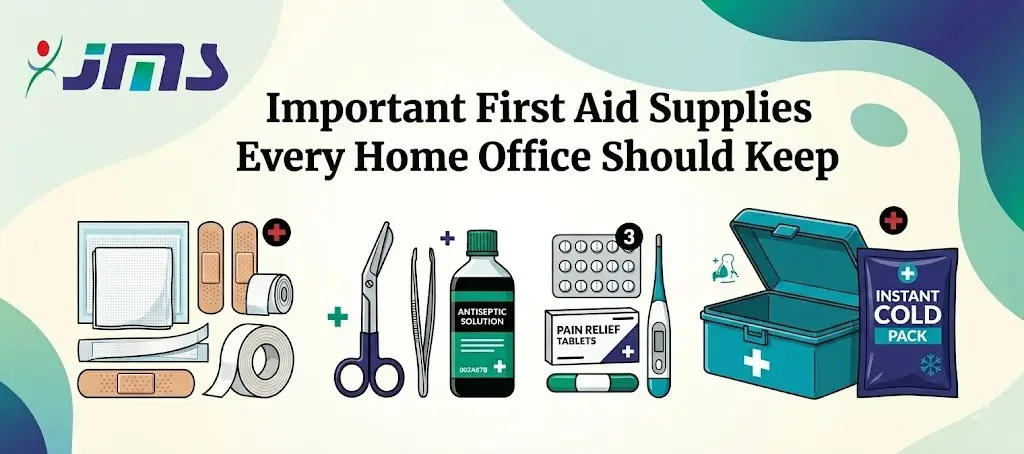
Infographic of essential home first-aid supplies: bandages, tape, scissors, antiseptic, pain relief tablets, thermometer, a first-aid kit, and an instant cold pack.

Important First Aid Supplies Every Home and Office Should Keep

A properly stocked first aid box is essential for handling minor injuries and sudden health emergencies at home or in the workplace. Basic medical supplies such as bandages, antiseptics, and gloves help provide quick wound care before professional treatment becomes available. In many situations, immediate emergency care can reduce complications and improve safety. Keeping an organized office first aid kit also helps create a safer environment for employees and visitors during unexpected accidents. Every first aid box should contain important medical supplies needed for quick wound care and basic emergency care during accidents or injuries. A properly maintained office first aid kit helps manage cuts, burns, sprains, and minor medical situations safely. High-quality medical supplies inside a first aid box improve hygiene and support effective wound care during emergencies. Regular inspection of office first aid products and proper preparation for emergency care help ensure better safety at home and workplaces. Keeping a well-organized first aid box at home or work helps manage injuries quickly with proper medical supplies and immediate emergency care support. Essential items used for wound care can help reduce infection risk and improve safety during accidents. A fully stocked office first aid kit is especially important for handling burns, cuts, sprains, and sudden medical situations efficiently. Regularly checking the first aid box, replacing expired medical supplies, maintaining proper wound care items, and preparing for emergency care can create a safer environment in homes and workplaces. A reliable first aid box plays an important role in providing quick emergency care during unexpected injuries at home or in workplaces. Essential medical supplies used for immediate wound care help control bleeding, protect injuries, and reduce infection risks effectively. Every office first aid kit should include properly stored medical supplies and updated wound care essentials for daily safety preparedness. Maintaining a complete first aid box, improving office first aid readiness, and ensuring proper emergency care support can help create a safer and healthier environment for everyone.   First Aid Box Essentials for Homes and Offices Accidents and minor medical emergencies can happen anytime and anywhere. Whether it is a small cut, burn, sprain, headache, or sudden injury, having a well-stocked first aid box can make a major difference before professional medical help becomes available. Therefore, every home and office should keep a properly organized first aid kit to handle basic medical situations quickly and safely. A good first aid box not only helps provide immediate care but also reduces the risk of complications and infections. Why a First Aid Box Is Important A first aid box allows quick response during emergencies and helps manage minor injuries effectively. It can help in situations such as: • Cuts and wounds• Minor burns• Nosebleeds• Sprains and strains• Fever or headache• Small accidents at home or workplace Moreover, immediate first aid can prevent a minor injury from becoming more serious. Essential Items Every First Aid Box Should Have A properly prepared first aid kit should contain basic medical supplies and emergency essentials. Adhesive Bandages Adhesive bandages are useful for covering small cuts, blisters, and minor wounds. They help by: • Protecting wounds from dirt• Reducing infection risk• Supporting faster healing Different sizes should be included for various types of injuries. Sterile Gauze and Cotton Sterile gauze pads and cotton are important for wound cleaning and dressing. These products help: • Absorb blood or fluids• Cover wounds safely• Maintain hygiene during dressing Additionally, sterile materials reduce the risk of contamination. Antiseptic Solution Antiseptic liquids or wipes are essential for cleaning wounds before dressing. They help kill germs and reduce infection risk after injuries such as cuts or abrasions. Commonly used antiseptics include: • Antiseptic liquids• Alcohol wipes• Disinfectant solutions Medical Adhesive Tape Medical tape helps secure gauze and dressings properly over wounds. A good-quality tape should provide: • Strong adhesion• Skin-friendly material• Easy removal without irritation Disposable Medical Gloves Disposable gloves are extremely important for maintaining hygiene during first aid treatment. They help prevent: • Direct contact with blood• Spread of germs• Cross-contamination Nitrile or latex gloves are commonly preferred in first aid kits. Scissors and Tweezers A small pair of scissors and tweezers can be very useful during emergencies. They are commonly used for: • Cutting bandages or tape• Removing splinters• Handling dressing materials safely Pain Relief Medicines Basic medicines for common discomforts can also be included in the first aid box. These may help manage: • Fever• Headache• Minor body pain However, medicines should always be stored safely and checked regularly for expiry dates. Burn Cream or Ointment Minor burns can occur in kitchens, offices, or workplaces unexpectedly. Burn ointments may help: • Soothe the skin• Reduce irritation• Protect the affected area Quick treatment is important to minimize discomfort and skin damage. Elastic Bandages Elastic bandages are useful for supporting sprains, strains, or minor joint injuries. They help by: • Providing compression• Reducing swelling• Supporting injured muscles and joints These bandages are especially important in office and workplace first aid kits. Digital Thermometer A thermometer helps monitor body temperature during illness or fever. Keeping a digital thermometer in the first aid box allows quick and accurate temperature checks when needed. Emergency Contact Information Besides medical supplies, every first aid box should also include important emergency contact details such as: • Nearby hospital numbers• Ambulance services• Family emergency contacts• Workplace medical contacts This can help save valuable time during emergencies. Tips for Maintaining a First Aid Box Simply having a first aid box is not enough. It should also be maintained properly. Important tips include: • Check expiry dates regularly• Replace used items immediately• Store the box in an accessible location• Keep it away from moisture and heat• Ensure everyone knows where it is kept Additionally, offices should inspect first aid kits periodically to maintain readiness. Importance of First Aid Kits in Offices Workplaces can experience unexpected accidents such as slips, cuts, burns, or minor injuries. Therefore, office first aid kits are essential for: • Employee safety• Emergency preparedness• Immediate injury management• Workplace hygiene

Important First Aid Supplies Every Home and Office Should Keep Read More »

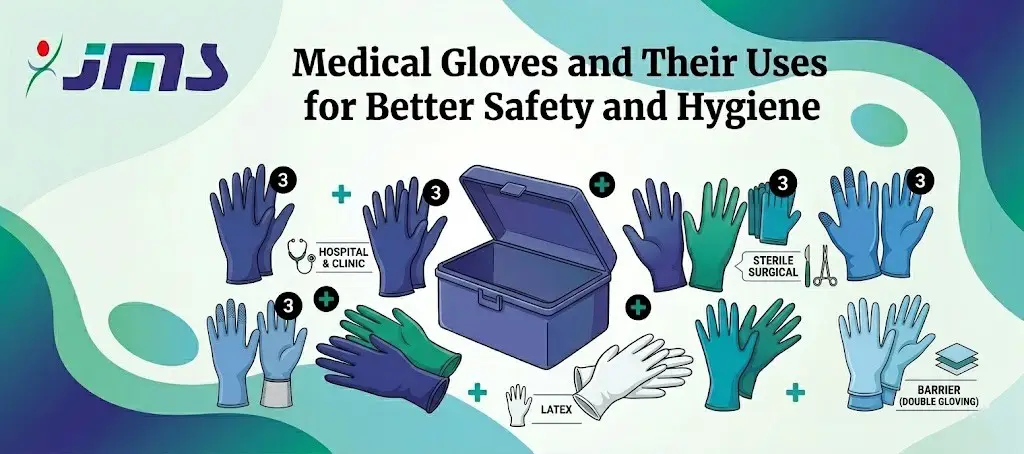
Informational infographic showing various medical gloves (blue, green, latex, sterile surgical, barrier) around a central medical kit to illustrate safety and hygiene uses.

Medical Gloves and Their Uses for Better Safety and Hygiene

Understanding different medical gloves types is important for maintaining hygiene, safety, and infection control in healthcare environments. Various gloves are designed for different medical purposes, including surgical gloves uses, routine examinations, and laboratory protection. High-quality sterile medical gloves help reduce contamination risks during procedures, while modern healthcare safety gloves improve protection for both patients and healthcare workers. In addition, understanding nitrile gloves benefits helps medical professionals choose durable and allergy-safe protective equipment. Different medical gloves types are used in hospitals and clinics depending on the procedure and safety requirements. Proper knowledge of surgical gloves uses, durable sterile medical gloves, and protective healthcare safety gloves helps maintain infection control standards. Many healthcare professionals also prefer nitrile products because of important nitrile gloves benefits such as flexibility, chemical resistance, and allergy protection. Choosing the correct medical gloves types improves safety, supports hygiene, and enhances medical protection during healthcare procedures.   Types of Medical Gloves and Their Uses Medical gloves are one of the most important protective products used in healthcare settings. They help maintain hygiene, reduce contamination, and protect both healthcare workers and patients during medical procedures. Today, different types of medical gloves are used for different purposes depending on the level of protection, comfort, and medical application required. Choosing the right glove is essential for ensuring safety and effective patient care. Why Medical Gloves Are Important in Healthcare Medical gloves create a protective barrier between the hands and potentially harmful substances. They help prevent: • Cross-contamination• Spread of infections• Exposure to blood and body fluids• Transmission of bacteria and viruses As healthcare standards continue to improve, the use of high-quality medical gloves has become even more important in hospitals, clinics, laboratories, and diagnostic centers. Latex Medical Gloves Latex gloves are among the most commonly used medical gloves because they offer excellent flexibility and comfort. These gloves are widely preferred for: • Surgical procedures• Medical examinations• Dental treatments• Laboratory work Advantages of latex gloves include: • High elasticity• Comfortable fit• Strong protection against contamination• Good touch sensitivity However, some people may develop latex allergies, which has increased the demand for alternative glove materials. Nitrile Medical Gloves Nitrile gloves are becoming increasingly popular because they are highly durable and latex-free. These gloves are commonly used in: • Hospitals• Emergency care units• Laboratories• Industrial medical settings Benefits of nitrile gloves include: • Strong puncture resistance• Excellent chemical resistance• Reduced allergy risk• High durability Additionally, nitrile gloves provide reliable protection in environments where exposure to chemicals or infectious materials is common. Vinyl Medical Gloves Vinyl gloves are generally used for short-duration and low-risk tasks. They are commonly suitable for: • Basic patient care• Cleaning tasks• Food handling• Non-invasive procedures Advantages include: • Cost-effectiveness• Latex-free material• Easy availability However, vinyl gloves may provide lower durability compared to latex and nitrile gloves. Surgical Gloves Surgical gloves are specially designed for operation theatres and sterile medical procedures. These gloves offer: • Precise fit• High sensitivity• Sterile protection• Better control during surgery They are manufactured under strict quality standards to ensure maximum safety during surgical procedures. Examination Gloves Examination gloves are used for routine medical examinations and patient care activities. Healthcare professionals commonly use them for: • Physical examinations• Diagnostic procedures• Blood sample collection• General patient interaction These gloves may be made from latex, nitrile, or vinyl depending on the requirement. Sterile vs Non-Sterile Gloves Medical gloves are also classified as sterile and non-sterile gloves. Sterile Gloves Sterile gloves are free from microorganisms and are mainly used for: • Surgical procedures• Invasive treatments• Sterile medical environments They help reduce the risk of infection during critical procedures. Non-Sterile Gloves Non-sterile gloves are commonly used for routine healthcare tasks such as: • Patient examinations• Cleaning procedures• Basic medical care These gloves still provide protection but are not intended for sterile surgical environments. Factors to Consider While Choosing Medical Gloves Selecting the right glove depends on the medical application and level of protection required. Important factors include: • Material type• Allergy concerns• Durability• Comfort and fit• Resistance to chemicals or punctures• Sterility requirements Healthcare providers should always choose gloves that meet proper safety and quality standards. Importance of Proper Glove Usage Even the best medical gloves are effective only when used correctly. Healthcare professionals should: • Change gloves between patients• Avoid reusing disposable gloves• Dispose of gloves safely• Wash hands before and after glove use Proper glove practices help maintain infection control and patient safety. Growing Demand for Disposable Medical Gloves The demand for disposable gloves has increased significantly in recent years due to greater awareness about hygiene and infection prevention. Medical gloves are now essential not only in healthcare but also in: • Pharmaceutical industries• Food industries• Laboratories• Home healthcare settings As healthcare systems continue to evolve, the importance of reliable protective equipment will continue to grow. Trusted Medical and Surgical Products by JMS Medicon Looking for reliable disposable medical gloves and surgical products? 📍 JMS Medicon Private LimitedPlot No-85, Padmalava Nagar, Trisulia,Cuttack, Odisha – 754005 📞 Phone: +91 9437040988📧 Email: jmsmedicon@gmail.com🌐 Website: jmsmedicon.com Medical gloves play a crucial role in maintaining hygiene, reducing infection risks, and protecting healthcare professionals during patient care. Choosing high-quality disposable gloves helps ensure safer healthcare environments and better protection for everyone involved.

Medical Gloves and Their Uses for Better Safety and Hygiene Read More »

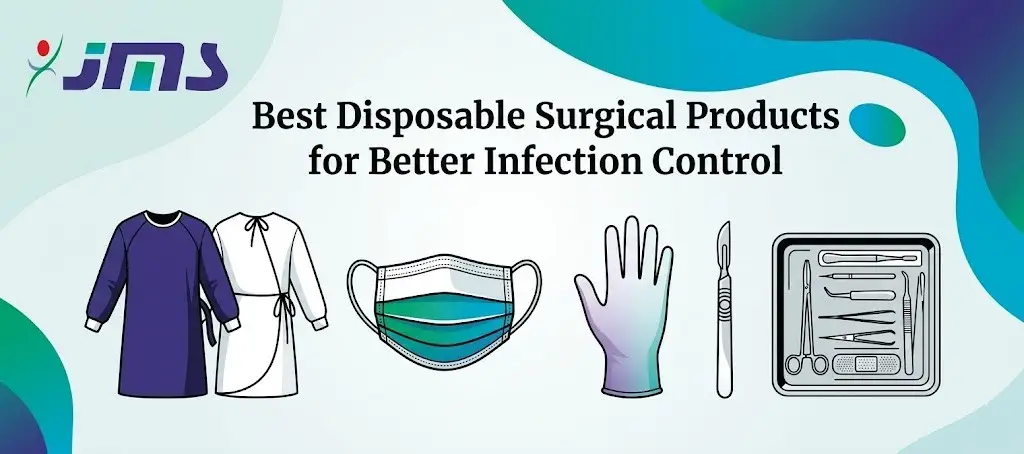
JMS banner with the headline 'Best Disposable Surgical Products for Better Infection Control' and icons of a disposable gown, a medical robe, a face mask, a surgical glove, a scalpel, and a surgical instrument tray.

Best Disposable Surgical Products for Better Infection Control

Disposable surgical products play an essential role in maintaining safety, cleanliness, and efficiency in modern healthcare settings. High-quality medical supplies such as surgical gloves, masks, dressings, and disposable materials help improve hospital hygiene and reduce infection risks during treatment. These products are widely used for wound care, surgeries, emergency treatment, and routine medical procedures. Proper use of disposable products supports safer healthcare environments for both patients and medical professionals.a Modern hospitals depend on disposable surgical products and reliable medical supplies to maintain proper hospital hygiene and patient safety. Essential items like surgical gloves and disposable dressing materials are widely used for effective wound care and infection prevention. High-quality disposable surgical products, sterile medical supplies, protective surgical gloves, and proper wound care products help improve hospital hygiene during surgeries and emergency treatment. Healthcare facilities continue to rely on disposable products for safer and more efficient patient care. Healthcare facilities rely heavily on disposable surgical products to improve patient safety and maintain proper hospital hygiene during daily medical procedures. Sterile medical supplies such as surgical gloves, gauze, masks, and dressing materials are essential for safe wound care and infection prevention. Proper use of disposable surgical products, high-quality medical supplies, protective surgical gloves, and reliable wound care products helps strengthen hospital hygiene standards in clinics and hospitals. Consistent use of disposable healthcare products also improves efficiency and supports safer treatment environments for patients and healthcare workers.   Importance of Disposable Surgical Products in Modern Healthcare Disposable surgical products have become an essential part of modern healthcare systems. From hospitals and clinics to emergency care centers and operation theatres, these products help maintain hygiene, improve patient safety, and reduce the risk of infections. Today, healthcare professionals rely heavily on disposable medical supplies because they provide convenience, efficiency, and a higher standard of protection for both patients and medical staff. What Are Disposable Surgical Products? Disposable surgical products are single-use medical items designed to be used once and safely discarded after use. These products are commonly used in: • Hospitals• Clinics• Diagnostic centers• Operation theatres• Emergency care units Common examples include: • Surgical gloves• Gauze swabs• Cotton rolls• Surgical masks• Bandages• Syringes• Disposable drapes• Surgical tapes These products play a critical role in maintaining sterile healthcare environments. Why Disposable Surgical Products Are Important Modern healthcare depends on strict hygiene and infection control standards. Disposable products help healthcare facilities maintain these standards effectively. Reduced Risk of Infections One of the biggest advantages of disposable surgical products is infection prevention. Single-use products reduce the chances of: • Cross-contamination• Hospital-acquired infections• Bacterial transmission• Viral spread between patients Using sterile disposable items improves patient safety during medical procedures and wound care. Improved Hygiene Standards Disposable products are manufactured under controlled conditions to maintain cleanliness and sterility. This helps healthcare professionals provide: • Safer treatments• Cleaner surgical environments• Better wound management• Improved patient care Maintaining proper hygiene is especially important during surgeries and invasive procedures. Convenience and Time Efficiency Reusable medical products often require: • Cleaning• Sterilization• Inspection• Maintenance Disposable products eliminate these extra steps, allowing healthcare staff to save time and focus more on patient care. This improves workflow efficiency in busy hospitals and clinics. Better Safety for Healthcare Workers Disposable surgical products also help protect doctors, nurses, and healthcare workers from exposure to harmful infections. Protective products such as: • Surgical gloves• Face masks• Disposable gowns help reduce direct contact with blood, fluids, and infectious materials. This is especially important during surgeries and emergency procedures. Essential in Modern Surgeries Operation theatres require highly sterile conditions to prevent complications. Disposable surgical products help maintain safety during procedures by: • Preventing contamination• Supporting infection control protocols• Providing sterile operating conditions Many advanced surgical procedures now rely heavily on high-quality disposable medical supplies. Importance in Wound Care Disposable wound care products are widely used in hospitals and home healthcare settings. Products such as: • Gauze swabs• Cotton rolls• Dressings• Surgical tapes help absorb fluids, protect wounds, and support proper healing. Proper wound management reduces the risk of delayed healing and infection. Cost-Effective Healthcare Solution Although disposable products are designed for single use, they often reduce long-term healthcare costs by lowering infection-related complications and sterilization expenses. Benefits include: • Reduced risk of repeat treatment• Lower sterilization costs• Faster patient management• Improved operational efficiency This makes disposable medical supplies an important investment for healthcare facilities. Role During Public Health Emergencies The importance of disposable medical products became even more visible during global health emergencies such as the COVID-19 pandemic. Products like: • Masks• Gloves• PPE kits• Disposable protective equipment played a major role in protecting healthcare workers and patients. The demand for reliable surgical products continues to grow as healthcare systems focus more on safety and infection control. Choosing High-Quality Disposable Surgical Products Healthcare providers should always choose products that meet proper quality and safety standards. Reliable surgical products should offer: • High absorbency• Proper sterility• Skin-friendly materials• Strong durability• Safe packaging Using high-quality products improves both patient safety and treatment outcomes. The Future of Disposable Medical Products Healthcare technology is continuously evolving, and disposable medical products are becoming more advanced and efficient. Future innovations may focus on: • Eco-friendly materials• Improved comfort and safety• Better absorbency and protection• Advanced infection control solutions The healthcare industry will continue to depend on disposable products for safer and more effective patient care. Trusted Surgical and Medical Products by JMS Medicon Looking for reliable disposable surgical and medical products for healthcare use? 📍 JMS Medicon Private LimitedPlot No-85, Padmalava Nagar, Trisulia,Cuttack, Odisha – 754005 📞 Phone: +91 9437040988📧 Email: jmsmedicon@gmail.com🌐 Website: jmsmedicon.com Disposable surgical products are a vital part of modern healthcare infrastructure. From infection prevention to patient safety and operational efficiency, these products help healthcare professionals deliver better medical care every day. Choose trusted quality products that support safer treatments, better hygiene, and improved healthcare outcomes.

Best Disposable Surgical Products for Better Infection Control Read More »