
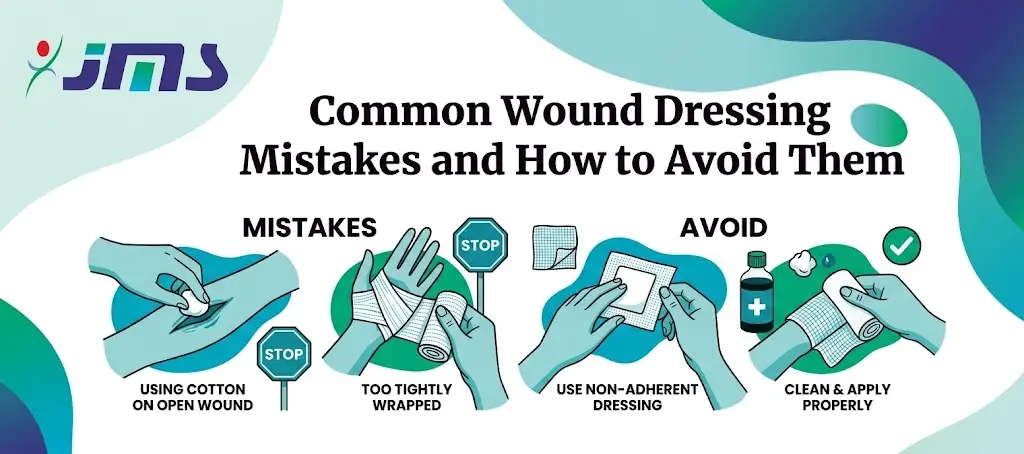
Common Wound Dressing Mistakes and How to Avoid Them
Wound Dressing Mistakes are common but can significantly affect the healing process and increase the risk of complications. Simple Wound Care Errors, improper dressing techniques, and poor hygiene practices may lead to delayed recovery and infection. Understanding Dressing Change Mistakes and maintaining Proper Wound Dressing are essential for reducing Wound Infection Risk and promoting healthy tissue repair. Proper wound care plays an important role in preventing infections and promoting faster healing. While wound dressings help protect injuries and support recovery, incorrect dressing practices can delay healing and increase the risk of complications. Therefore, understanding common wound dressing mistakes and avoiding them is essential for maintaining hygiene and ensuring effective wound management. Whether at home, in clinics, or in hospitals, following the right dressing techniques can make a significant difference in recovery. Why Proper Wound Dressing Is Important A wound dressing acts as a protective barrier and creates a suitable environment for healing. It helps: • Prevent infections• Absorb excess fluids• Protect wounds from dirt and bacteria• Support faster tissue repair• Reduce discomfort during recovery Moreover, proper wound care helps minimize complications and improves patient outcomes. Using Non-Sterile Materials One of the most common mistakes is using non-sterile or contaminated materials for dressing wounds. This can lead to: • Increased infection risk• Delayed healing• Spread of bacteria Therefore, sterile gauze swabs, cotton, and dressing materials should always be used whenever possible. Not Washing Hands Before Dressing Clean hands are essential before touching any wound or dressing material. Failing to wash hands may: • Transfer germs to the wound• Cause infections• Increase healing time Additionally, disposable medical gloves can provide extra protection and maintain hygiene during dressing changes. Changing Dressings Too Frequently Many people believe that changing dressings repeatedly helps wounds heal faster. However, excessive dressing changes can disturb newly forming tissues. This may result in: • Delayed healing• Increased pain• Greater risk of infection Therefore, dressings should only be changed according to medical advice or when they become wet, dirty, or loose. Leaving Dressings On for Too Long On the other hand, keeping the same dressing for an extended period can also create problems. Old dressings may: • Accumulate bacteria• Cause unpleasant odors• Increase moisture buildup• Lead to infections Hence, dressings should be inspected regularly and replaced when necessary. Applying Excessive Pressure While securing dressings is important, applying too much pressure can restrict blood circulation. Excessively tight dressings may cause: • Swelling• Pain and discomfort• Reduced blood flow• Slower healing Therefore, dressings should be secure but comfortable. Ignoring Signs of Infection Many people overlook early signs of wound infection. Warning signs may include: • Increased redness• Swelling around the wound• Pus or unusual discharge• Persistent pain• Fever If these symptoms appear, medical attention should be sought promptly to prevent complications. Using the Wrong Type of Dressing Different wounds require different types of dressings. Using an unsuitable dressing may: • Delay healing• Cause excessive dryness or moisture• Increase discomfort• Reduce protection against infection Therefore, selecting the appropriate dressing material is essential for effective wound care. Reusing Disposable Dressing Materials Disposable medical products are intended for single use only. Reusing them can: • Introduce bacteria into the wound• Increase contamination risks• Compromise patient safety Consequently, fresh and sterile dressing supplies should always be used. Removing Dressings Improperly Pulling off dressings forcefully can damage healing tissues and cause pain. To avoid this problem: • Remove dressings gently• Use sterile saline if needed• Follow proper wound care procedures• Avoid unnecessary trauma to the wound This helps protect newly formed tissues and supports smoother healing. Failing to Keep the Wound Clean A clean wound environment is essential for proper recovery. Poor hygiene may lead to: • Bacterial growth• Delayed healing• Increased infection risk• Additional complications Therefore, wounds should be cleaned according to medical recommendations before applying fresh dressings. Importance of Using Quality Wound Care Products High-quality dressing materials contribute significantly to better healing outcomes. Reliable wound care products provide: • Proper sterility• High absorbency• Skin-friendly materials• Secure protection against contaminants• Better patient comfort Additionally, quality products help healthcare professionals manage wounds more effectively. Trusted Medical and Surgical Products by JMS Medicon Looking for reliable wound care and disposable medical products? 📍 JMS Medicon Private LimitedPlot No-85, Padmalava Nagar, Trisulia,Cuttack, Odisha – 754005 📞 Phone: +91 9437040988📧 Email: jmsmedicon@gmail.com🌐 Website: jmsmedicon.com Better Wound Care Begins with the Right Practices Proper wound dressing is essential for preventing infections and supporting faster recovery. Avoiding common mistakes and using quality medical supplies can greatly improve healing outcomes and reduce complications. By following correct dressing techniques and maintaining hygiene, patients and healthcare professionals can ensure safer and more effective wound management.
Common Wound Dressing Mistakes and How to Avoid Them Read More »