
Pulse Oximeter Uses have become increasingly important for monitoring oxygen levels and supporting respiratory health. By enabling accurate Blood Oxygen Monitoring, these devices help individuals track Oxygen Saturation Levels quickly and conveniently. Understanding Pulse Oximeter Benefits is essential for patients with respiratory or cardiovascular conditions, while Home Health Monitoring allows early detection of potential health issues and better management of overall well-being.
Pulse Oximeter Uses are widely recognized in both clinical and home settings for assessing oxygen levels and overall health status. The growing importance of Pulse Oximeter Uses lies in their ability to provide quick and noninvasive Blood Oxygen Monitoring, helping individuals keep track of Oxygen Saturation Levels. Healthcare professionals often recommend Pulse Oximeter Uses for patients with respiratory illnesses, heart conditions, or those recovering from infections.
In addition, Pulse Oximeter Uses support timely medical intervention by identifying abnormal Oxygen Saturation Levels before symptoms become severe. Understanding Pulse Oximeter Benefits can help individuals make informed decisions about their health and improve disease management. With advances in technology, Pulse Oximeter Uses have also become an essential part of Home Health Monitoring, allowing patients to monitor their condition conveniently and safely from home.
Monitoring oxygen levels is an important part of maintaining overall health, especially for individuals with respiratory conditions or certain medical illnesses. A pulse oximeter is a simple and non-invasive device that helps measure blood oxygen saturation and pulse rate quickly and accurately.
Therefore, pulse oximeters have become essential tools in hospitals, clinics, and even home healthcare settings. They help provide valuable information about a person’s oxygen levels and can assist in early detection of potential health issues.
What Is a Pulse Oximeter?
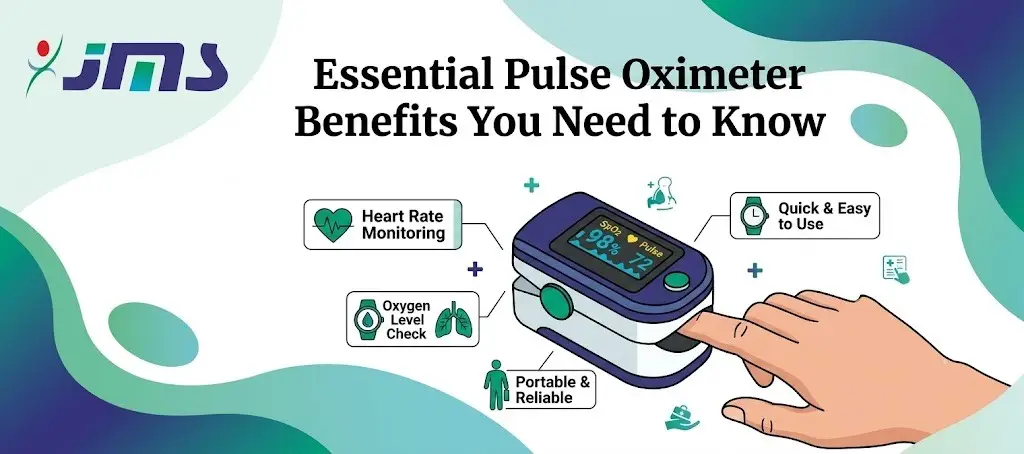
A pulse oximeter is a small electronic device that is usually placed on the fingertip to measure oxygen saturation (SpO2) in the blood and monitor heart rate.
The device works by using light sensors to estimate how much oxygen is being carried by red blood cells.
It is commonly used because it is:
• Quick and easy to use
• Non-invasive and painless
• Portable and lightweight
• Suitable for both adults and children
Moreover, it provides immediate readings, making it useful for routine monitoring and emergency situations.
Why Monitoring Oxygen Levels Is Important
Maintaining adequate oxygen levels is essential for proper functioning of the body’s organs and tissues.
Monitoring oxygen saturation helps:
• Detect low oxygen levels early
• Support timely medical intervention
• Track recovery from illnesses
• Assist in managing chronic respiratory conditions
• Improve patient safety
Consequently, regular monitoring can help prevent serious complications.
Common Uses of a Pulse Oximeter
Pulse oximeters are widely used in various healthcare settings.
They are commonly used for:
• Monitoring respiratory conditions
• Assessing oxygen levels after surgery
• Tracking patients with asthma or COPD
• Checking oxygen saturation during illness
• Monitoring fitness and physical activity
Additionally, they are often used during emergency care and routine health checkups.
Benefits of Using a Pulse Oximeter
A pulse oximeter offers several advantages for both healthcare professionals and patients.
Its benefits include:
• Fast and accurate readings
• Convenient home monitoring
• Early detection of oxygen deficiency
• Improved patient management
• Reduced need for invasive procedures
Therefore, it has become an important device for healthcare monitoring.
Who Can Benefit from a Pulse Oximeter?
Several individuals may benefit from regular oxygen level monitoring.
These include:
• People with asthma
• Patients with chronic obstructive pulmonary disease (COPD)
• Individuals recovering from respiratory infections
• Elderly individuals
• Patients with heart conditions
• Athletes monitoring physical performance
Furthermore, doctors may recommend pulse oximeters for long-term monitoring in specific medical conditions.

How to Use a Pulse Oximeter Correctly
Using a pulse oximeter is simple and usually takes only a few seconds.
For accurate readings:
• Place the device on a clean fingertip
• Keep your hand relaxed and still
• Remove nail polish if possible
• Wait for the reading to stabilize
• Follow the manufacturer’s instructions
Additionally, repeated measurements can help provide more consistent results.
Understanding Pulse Oximeter Readings
A pulse oximeter mainly provides two measurements:
• Oxygen saturation (SpO2)
• Pulse rate
Normal oxygen saturation levels are generally considered to be between 95% and 100% for most healthy individuals.
However, readings may vary depending on age, health conditions, and medical advice.
Factors That Can Affect Accuracy
Certain factors may influence pulse oximeter readings.
These include:
• Cold hands or poor circulation
• Excessive movement during measurement
• Nail polish or artificial nails
• Improper placement of the device
• Low battery levels
Therefore, proper usage is important to obtain reliable results.
Importance of Pulse Oximeters in Home Healthcare
Home healthcare monitoring has become increasingly important in recent years.
Pulse oximeters help families:
• Monitor health conditions easily
• Detect potential breathing problems early
• Reduce unnecessary hospital visits
• Support recovery and ongoing treatment
As a result, they have become valuable additions to home medical kits.
Choosing a Quality Pulse Oximeter
Selecting a reliable device helps ensure accurate and dependable readings.
A good pulse oximeter should offer:
• Easy-to-read display
• Fast measurement results
• Comfortable finger fit
• Portable design
• Durable construction
Moreover, choosing quality healthcare products contributes to better patient care and monitoring.
Trusted Medical and Healthcare Products by JMS Medicon
Looking for reliable healthcare and medical monitoring products?
📍 JMS Medicon Private Limited
Plot No-85, Padmalava Nagar, Trisulia,
Cuttack, Odisha – 754005
📞 Phone: +91 9437040988
📧 Email: jmsmedicon@gmail.com
🌐 Website: jmsmedicon.com
Supporting Better Health Through Early Monitoring
A pulse oximeter is a simple yet valuable device that helps monitor oxygen levels and pulse rate efficiently. Its ease of use, portability, and ability to provide quick results make it an essential tool in hospitals, clinics, and home healthcare.
By using reliable medical devices and monitoring oxygen levels regularly, individuals can take proactive steps toward maintaining better health and overall well-being.
