Medical Supply Management

9 Essential Factors for Medical Procurement

9 Essential Factors for Better Medical Consumables Procurement

Medical consumables are essential for the daily functioning of hospitals, clinics, diagnostic centres, and other healthcare facilities. From surgical gloves and gauze swabs to cotton rolls, wound dressings, syringes, and disposable medical supplies, these products support routine patient care, infection prevention, and clinical procedures. However, purchasing medical consumables involves more than comparing prices. Healthcare facilities must consider product quality, safety requirements, supplier reliability, storage conditions, delivery schedules, and overall procurement costs. A well-planned medical consumables procurement process helps hospitals maintain adequate stock, reduce unnecessary expenditure, and support consistent healthcare operations. In this guide, we explore nine important factors every hospital should consider when procuring medical consumables. What Is Medical Consumables Procurement? Medical consumables procurement is the process of identifying, evaluating, purchasing, receiving, and managing disposable or frequently replenished medical products used in healthcare facilities. These products may include: Surgical gloves, masks, and disposable protective equipment Gauze swabs, absorbent cotton, and wound dressings Syringes, needles, and other procedure-related consumables Disposable examination and patient-care supplies Sterile medical products and surgical consumables An effective procurement strategy ensures that the right products are available in the right quantities, at the right time, and from suitable suppliers. 1. Evaluate Product Quality and Safety Product quality should be a primary consideration when purchasing medical consumables. Inconsistent quality can disrupt clinical workflows and create avoidable risks for healthcare providers and patients. Before placing an order, review the product specifications, intended use, material composition, packaging integrity, and relevant quality documentation. For products requiring sterility, verify the sterile status, packaging condition, and applicable expiry or use-by information. Hospitals should also confirm that products meet the regulatory and technical requirements applicable to their category and intended use. Key considerations: Consistent product specifications Appropriate quality documentation Intact packaging and clear labelling Applicable regulatory compliance Suitable sterility and expiry information, where relevant 2. Choose a Reliable Medical Consumables Supplier Supplier reliability directly affects the availability of essential medical products. Delayed deliveries or inconsistent product quality can interfere with hospital operations and increase procurement pressure. Hospitals should evaluate suppliers based on their product range, supply capacity, order fulfilment history, communication, documentation, and ability to handle recurring requirements. It is also useful to establish clear expectations for order confirmation, delivery timelines, product substitutions, and the handling of damaged or non-conforming goods. Key considerations: Consistent supply availability Clear communication and order tracking Transparent commercial terms Appropriate business and product documentation A defined process for resolving supply issues 3. Compare Total Procurement Costs, Not Just Prices The lowest quoted price does not always represent the best value. Differences in product specifications, packaging quantities, shipping charges, minimum order requirements, and defect rates can affect the total cost of purchasing. Hospitals should compare equivalent products using consistent specifications and calculate the overall cost of acquisition. Bulk purchasing may reduce the unit price, but only when the products can be used within their shelf life and stored under suitable conditions. Key considerations: Unit price and pack size Shipping and handling charges Minimum order quantities Expected product wastage Storage costs and expiry-related losses 4. Assess Product Specifications and Intended Use Medical consumables are designed for different clinical applications. Products that appear similar may differ in material, dimensions, absorbency, strength, sterility, or intended use. For example, gauze products may differ in ply, size, construction, packaging, and sterile status. Protective gloves may vary by material, size, and intended application. Procurement teams should prepare clear specifications before requesting quotations. This helps prevent unsuitable substitutions and makes supplier comparisons more accurate. Key considerations: Material and dimensions Sterile or non-sterile status Product performance requirements Intended clinical application Compatibility with established hospital protocols 5. Check Certifications and Regulatory Documentation Medical products may be subject to different regulatory requirements depending on their classification, intended use, and applicable jurisdiction. Hospitals should verify the documentation relevant to the specific product rather than relying on broad or unsupported certification claims. Where applicable, request product licences, conformity documents, quality certificates, test reports, declarations, and other records required for procurement and institutional audits. Documentation should be current, relevant to the product being purchased, and consistent with the supplier and product details. Key considerations: Applicable licences and registrations Relevant quality certificates Product-specific technical documents Batch or lot information, where applicable Traceable purchase and delivery records 6. Plan Inventory and Reordering Carefully Poor inventory management can result in shortages of essential products or excessive stock that ties up working capital. Both situations can affect hospital efficiency. Hospitals should review historical consumption, current stock, supplier lead times, seasonal demand, and expected changes in patient volume. Reorder levels can then be established for frequently used products. A first-expiry-first-out approach should be used for applicable products with expiry dates, alongside routine checks for damaged packaging and expired stock. Key considerations: Historical usage and consumption trends Minimum and maximum stock levels Reorder points and safety stock Expiry-date monitoring Regular inventory reconciliation 7. Verify Packaging, Labelling, and Storage Requirements Packaging protects medical consumables during transport and storage. Damaged packaging, unclear labels, or unsuitable storage conditions may compromise product integrity and usability. At the time of receipt, hospital staff should check the quantity delivered, product identity, batch or lot details where applicable, expiry information, and packaging condition. Products should be stored according to the manufacturer’s instructions, including any specified temperature, humidity, light protection, or handling requirements. Sterile products with compromised packaging should be assessed under the facility’s approved procedures and should not be treated as sterile merely because the product appears intact. Key considerations: Clear and legible product labels Intact packaging on receipt Appropriate storage conditions Correct batch and expiry information Safe handling and stock rotation 8. Ensure Consistent Supply and Delivery Timelines Hospitals need predictable deliveries to maintain continuity of patient care. A supplier’s ability to fulfil recurring orders can be as important as the initial product quotation. Procurement teams should review lead times, delivery coverage, order-processing procedures, and the supplier’s response to urgent requirements. For critical products, hospitals may consider approved backup suppliers in accordance with internal procurement policies. Delivery performance should be monitored over time so

9 Essential Factors for Better Medical Consumables Procurement Read More »
Medical Supply Inventory

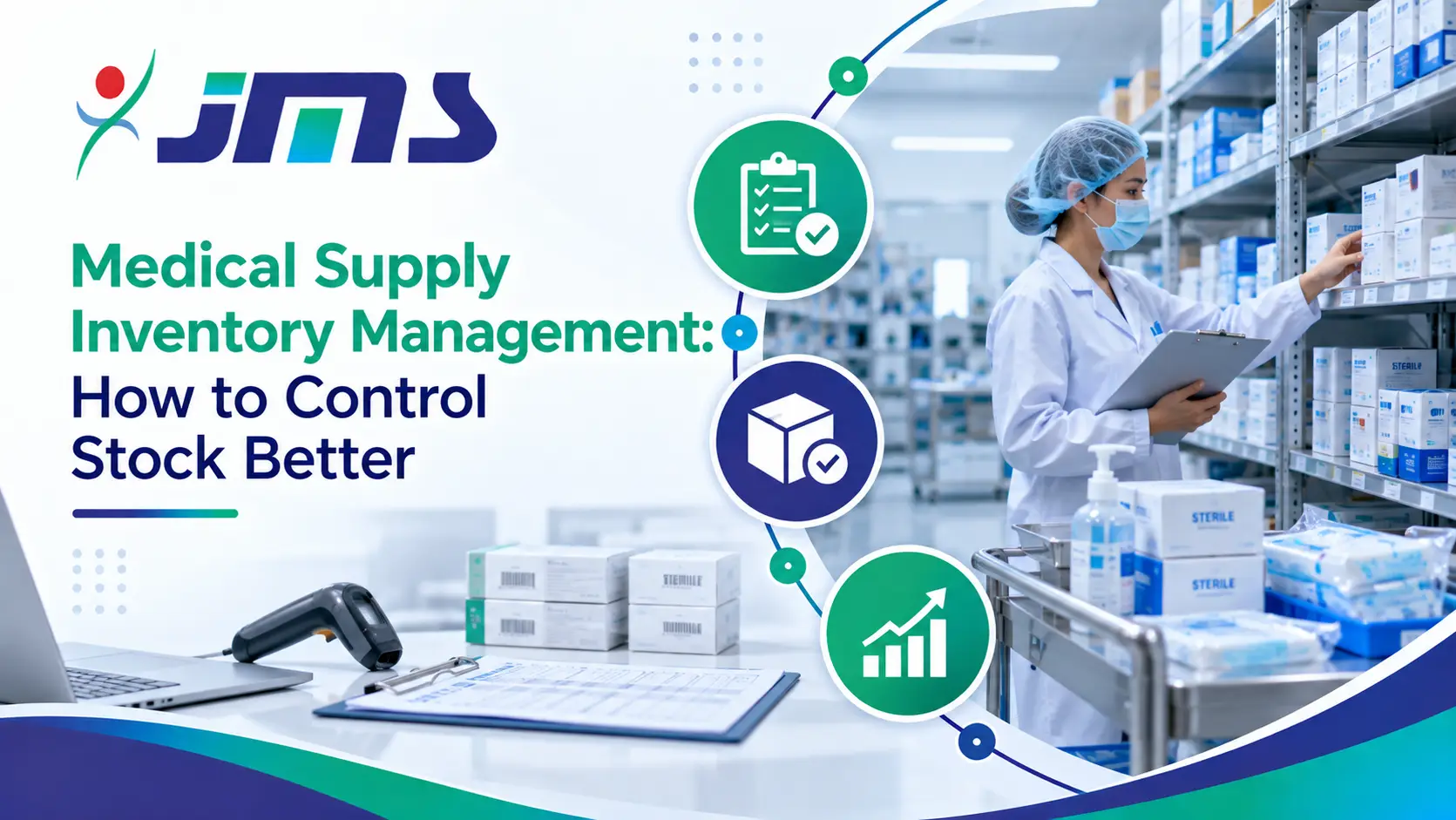
Medical Supply Inventory Management: How to Control Stock Better

Healthcare facilities rely on a continuous supply of medical consumables and healthcare products to support daily operations. Hospitals, clinics, nursing homes, diagnostic centres, surgical facilities, and other healthcare organizations may regularly use products such as gloves, cotton, gauze, dressings, medical tapes, orthopedic supplies, and medical devices. Managing these products effectively requires more than simply keeping large quantities in storage. Healthcare facilities need to understand how much stock they use, where products should be stored, when inventory needs to be replenished, which products should be used first, and how to avoid unnecessary overstocking. A structured inventory-management system can help healthcare organizations maintain product availability while reducing avoidable wastage and storage pressure. Why Medical Supply Inventory Management Matters Poor inventory management can create two opposite problems. Too Little Stock Insufficient inventory can lead to: Stockouts Emergency purchasing Delayed procurement Increased operational pressure Difficulty supporting routine requirements Too Much Stock Excess inventory can lead to: Increased storage requirements Products approaching expiry Expiry-related wastage Capital tied up in unused inventory More difficult stock organization The objective is therefore to maintain a balanced inventory level based on actual requirements. 1. Start With Demand Planning Demand planning is the process of estimating how much of a particular medical product a healthcare facility is likely to need over a specific period. Rather than purchasing based only on assumptions, facilities can use historical consumption and operational information to make more informed decisions. What Should Be Considered? Demand planning can take into account: Historical product usage Patient volume Number of procedures Department requirements Seasonal changes Upcoming medical camps or events Supplier lead time Product shelf life Available storage capacity For example, a facility that uses a high quantity of examination gloves every month can review previous consumption before deciding how much to order. 2. Understand Actual Consumption Historical consumption is one of the most useful starting points for inventory planning. Healthcare facilities can record how much of each product is: Received Issued Used Returned Discarded Expired This information can help identify high-use, medium-use, and slow-moving products. Example If a clinic consistently uses approximately 500 boxes of a particular product each month, this historical pattern can help inform future purchasing decisions. However, historical usage should not be treated as a fixed forecast. Changes in patient volume, services, or clinical activity can affect future demand. 3. Classify Products by Usage Not all medical products need to be managed in exactly the same way. A useful approach is to classify inventory into: High-Use Products Frequently consumed products such as commonly used gloves, gauze, cotton, and dressings may require more frequent monitoring. Medium-Use Products Products that are needed regularly but at lower volumes can be monitored according to their consumption patterns. Low-Use Products Specialized products may be required less frequently and should be purchased according to actual demand and shelf-life considerations. This classification helps procurement teams decide which products need closer monitoring. 4. Organize Medical Supplies Properly Once products arrive, proper storage organization becomes essential. Products should have clearly defined locations based on factors such as: Product category Product type Size Department Usage frequency Expiry date Storage requirements For example: Gloves → Medium → Examination → Rack A Gauze → 10 × 10 cm → Sterile → Rack B Clear labels can help staff identify products quickly and reduce unnecessary handling. 5. Store Frequently Used Products Where They Are Easy to Access High-use products should generally be placed in convenient locations while still meeting their storage requirements. This can help reduce: Staff searching time Unnecessary movement Repeated handling Delays in routine supply distribution However, convenience should never override appropriate storage conditions or infection-control procedures. 6. Separate Different Product Types Medical products with similar packaging can sometimes be confused. For example, gloves may be available in different: Sizes Materials Specifications Intended applications Gauze products can also differ in: Dimensions Layers Construction Sterility Packaging format Clearly separating similar products and using readable labels can help reduce selection errors. 7. Monitor Stock Levels Regularly Stock monitoring helps healthcare facilities know what is available and when replenishment may be needed. A basic inventory record can include: Inventory Information Purpose Product Name Identifies item Quantity Shows current stock Minimum Level Indicates lower stock threshold Reorder Level Supports purchasing decisions Maximum Level Helps control excess stock Batch/Lot Supports traceability Expiry Date Supports stock rotation Storage Location Makes products easier to find Supplier Supports procurement The frequency of stock checks can be adjusted according to product usage and operational importance. 8. Establish Minimum Stock Levels A minimum stock level represents the quantity below which a facility may need to take action to replenish inventory. For example, a facility may establish a minimum quantity for frequently used gloves or gauze. When stock approaches this level, procurement staff can review: Current demand Open purchase orders Supplier lead time Expected usage Available alternatives Minimum levels should be based on the facility’s actual requirements rather than using the same number for every product. 9. Establish Reorder Levels A reorder level indicates when purchasing action should generally be considered. The calculation can take into account: Average usage + supplier lead time + appropriate safety stock The exact method will vary according to the facility’s inventory system. For critical products, facilities may maintain additional reserve stock where appropriate. 10. Use Appropriate Stock Rotation Stock rotation helps ensure that older or earlier-expiring products are used before newer stock when appropriate. For products with expiry dates, FEFO — First Expiry, First Out — is often a useful inventory principle. How FEFO Works Suppose a healthcare facility has: Batch A → Expiry: March Batch B → Expiry: July Batch A should generally be prioritized before Batch B, provided it remains suitable for use. FEFO can help reduce unnecessary expiry-related wastage. 11. Monitor Expiry Dates Expiry monitoring should be part of routine inventory management. Staff can regularly identify products that are: Approaching expiry Already expired Slow-moving Damaged Missing required labels Stored under unsuitable conditions Products that have expired or whose integrity is compromised should not be used and should

Medical Supply Inventory Management: How to Control Stock Better Read More »

Medical Product Packaging

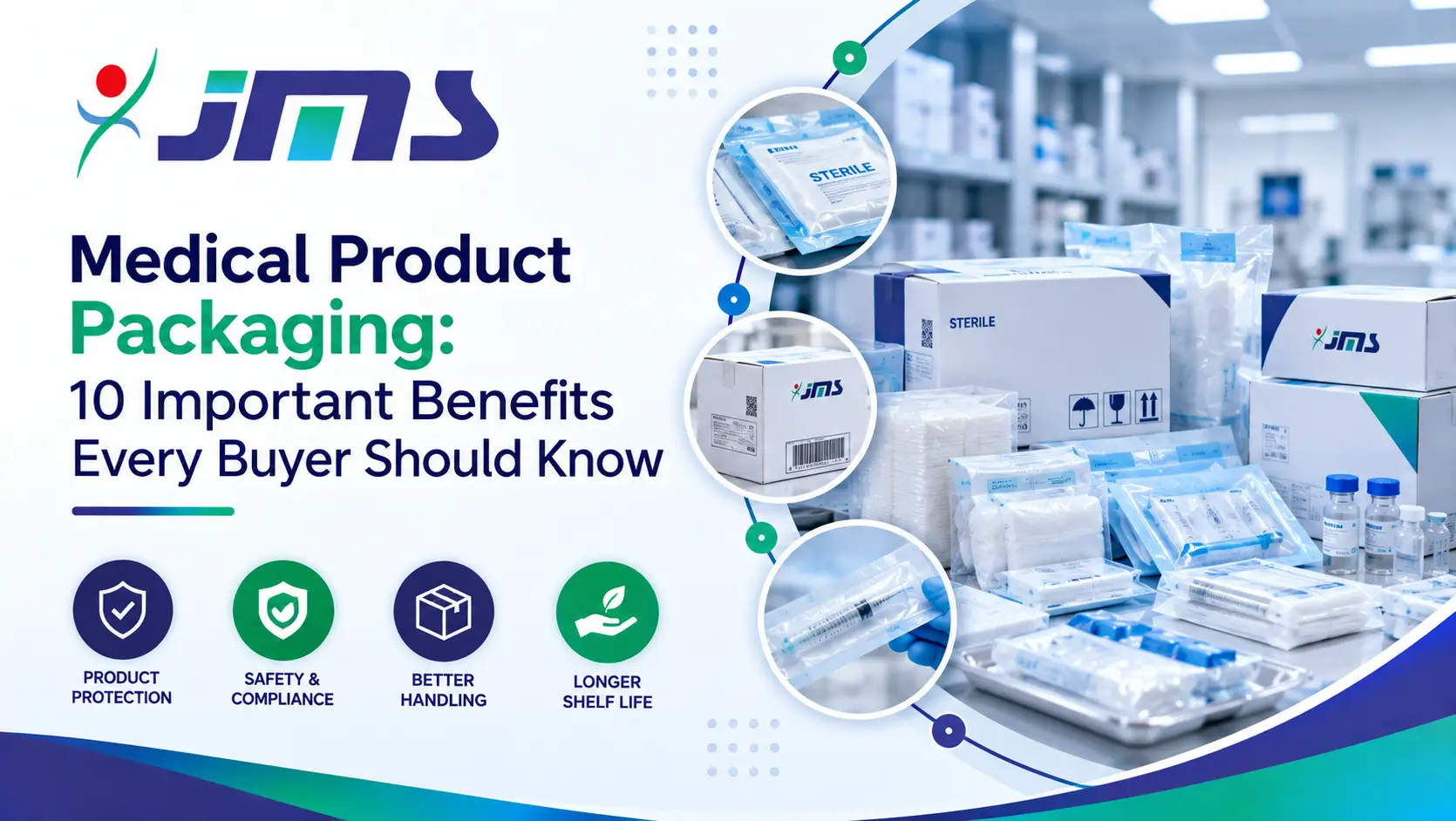
Medical Product Packaging: 10 Important Benefits Every Buyer Should Know

Packaging plays an important role in the healthcare product supply chain. For medical consumables and healthcare products, packaging is not simply an outer covering. It can help with product identification, handling, storage, hygiene, traceability, and protection throughout transportation and use. Products such as medical gloves, cotton, gauze, dressings, tapes, orthopedic products, and medical devices may pass through several stages before reaching a healthcare professional. Appropriate packaging can help protect products during these stages and provide important information to healthcare buyers and users. However, packaging requirements vary depending on the product. Healthcare organizations should always follow the manufacturer’s labeling, instructions, and applicable requirements. What Is the Role of Packaging in Healthcare Products? Medical product packaging can serve several functions at the same time. It may help: Identify the product Protect the contents Provide product information Support safe handling Facilitate storage Protect against environmental exposure Maintain package integrity Support batch and lot identification Communicate expiry or shelf-life information Provide relevant usage or storage instructions The exact role depends on the product, its intended use, and the type of packaging used. 1. Packaging Helps Identify the Product Healthcare facilities may store hundreds or thousands of different medical products. Clear packaging helps staff distinguish between products that may look similar. Important information may include: Product name Product type Size Dimensions Quantity Material Product code Intended use Manufacturer information For example, different sizes of medical gloves may have similar packaging. Clear product identification can help staff select the correct size. Similarly, gauze products may differ in dimensions, layers, construction, or packaging format. Clear labeling helps healthcare buyers and staff distinguish between them. 2. Packaging Supports Product Handling Medical supplies can be transported and handled several times before they are used. Packaging can help make products easier to: Transport Carry Stack Store Count Distribute Identify Appropriate packaging can also help protect products from unnecessary physical handling. For larger healthcare facilities, products may move from: Manufacturer → Distributor → Central Medical Store → Department → Point of Use At each stage, packaging can help maintain product organization and identification. 3. Packaging Supports Storage Storage conditions can affect medical products, particularly when products are exposed to unsuitable environmental conditions. Packaging can provide a layer of protection against factors such as: Dust Moisture Light, where applicable Physical damage Contamination risks However, packaging should not be considered a substitute for proper storage conditions. Healthcare facilities should still follow the manufacturer’s specified storage requirements. Good Storage Practice Products should generally be: Stored in clean areas Protected from moisture Kept away from unnecessary contamination Protected from excessive heat where applicable Stored according to manufacturer instructions Kept in suitable original packaging where appropriate 4. Packaging Can Support Hygiene Hygiene is an important consideration for healthcare products. Packaging can help limit unnecessary exposure of products to the surrounding environment during transportation and storage. This can be particularly relevant for products that require controlled handling or specific packaging conditions. For products supplied as sterile, the packaging system is particularly important because package integrity is part of maintaining the product’s sterile state until use. Before Using a Packaged Medical Product Healthcare staff should check for: Tears Punctures Broken seals Open packaging Moisture damage Unusual contamination Missing or unclear labeling If packaging integrity is compromised, the product should be handled according to the healthcare facility’s established procedures. 5. Packaging Helps Protect Products During Transportation Medical products may travel long distances before reaching their final destination. During transportation, packages can potentially experience: Vibration Compression Impact Dust exposure Moisture exposure Temperature fluctuations Appropriate packaging can help reduce the risk of physical damage during handling and transportation. Outer cartons can also make it easier to organize products during bulk shipment. 6. Packaging Supports Product Traceability Traceability is important for healthcare products. Packaging may display information such as: Batch number Lot number Manufacturing information Product code Expiry date Manufacturer details This information can help healthcare organizations identify specific products within their inventory. Batch and lot information can also support inventory management and quality investigations where required. 7. Packaging Provides Expiry Information Many healthcare products have a defined shelf life or expiry date. Clear expiry information can help healthcare facilities manage inventory effectively. Staff can use expiry information to: Identify products approaching expiry Apply FEFO principles Reduce unnecessary wastage Prevent use of expired products Plan inventory rotation FEFO FEFO means First Expiry, First Out. Under this approach, products with the earliest expiry dates are generally prioritized for use or issue before products with later expiry dates, provided they remain suitable for use. 8. Packaging Communicates Storage Requirements Some healthcare products have specific storage requirements. The product packaging or accompanying documentation may communicate information relating to: Temperature Moisture Light exposure Handling Storage orientation Other product-specific requirements Healthcare facilities should review these instructions before storing products. Important There is no single storage condition that applies to every medical product. A product should be stored according to its manufacturer’s instructions and applicable requirements. 9. Packaging Helps Prevent Product Mix-Ups Healthcare facilities often manage products with similar names or appearances. For example: Different glove sizes Different gauze dimensions Sterile vs non-sterile products Different cotton formats Different tape sizes Different orthopedic products Clear packaging and labeling can reduce confusion during storage and distribution. Color coding or other visual identification may also be used by manufacturers, but staff should always confirm the actual product information rather than relying only on appearance. 10. Packaging Supports Inventory Management Good packaging can make inventory management easier by providing visible product information. Warehouse or medical-store staff can identify: Product Quantity Batch/lot Expiry Size Specification This makes stock counting and inventory recording more efficient. For large healthcare facilities, packaging information can also be captured in digital inventory systems. Packaging Requirements for Different Medical Products Different medical products may require different packaging approaches. Medical Gloves Packaging can help identify: Glove type Size Quantity Manufacturer Batch/lot Expiry information where applicable The packaging should protect gloves from unnecessary environmental exposure and physical damage. Cotton Products Packaging can help protect cotton products from: Dust Moisture Physical

Medical Product Packaging: 10 Important Benefits Every Buyer Should Know Read More »

How to Organize Medical Supplies

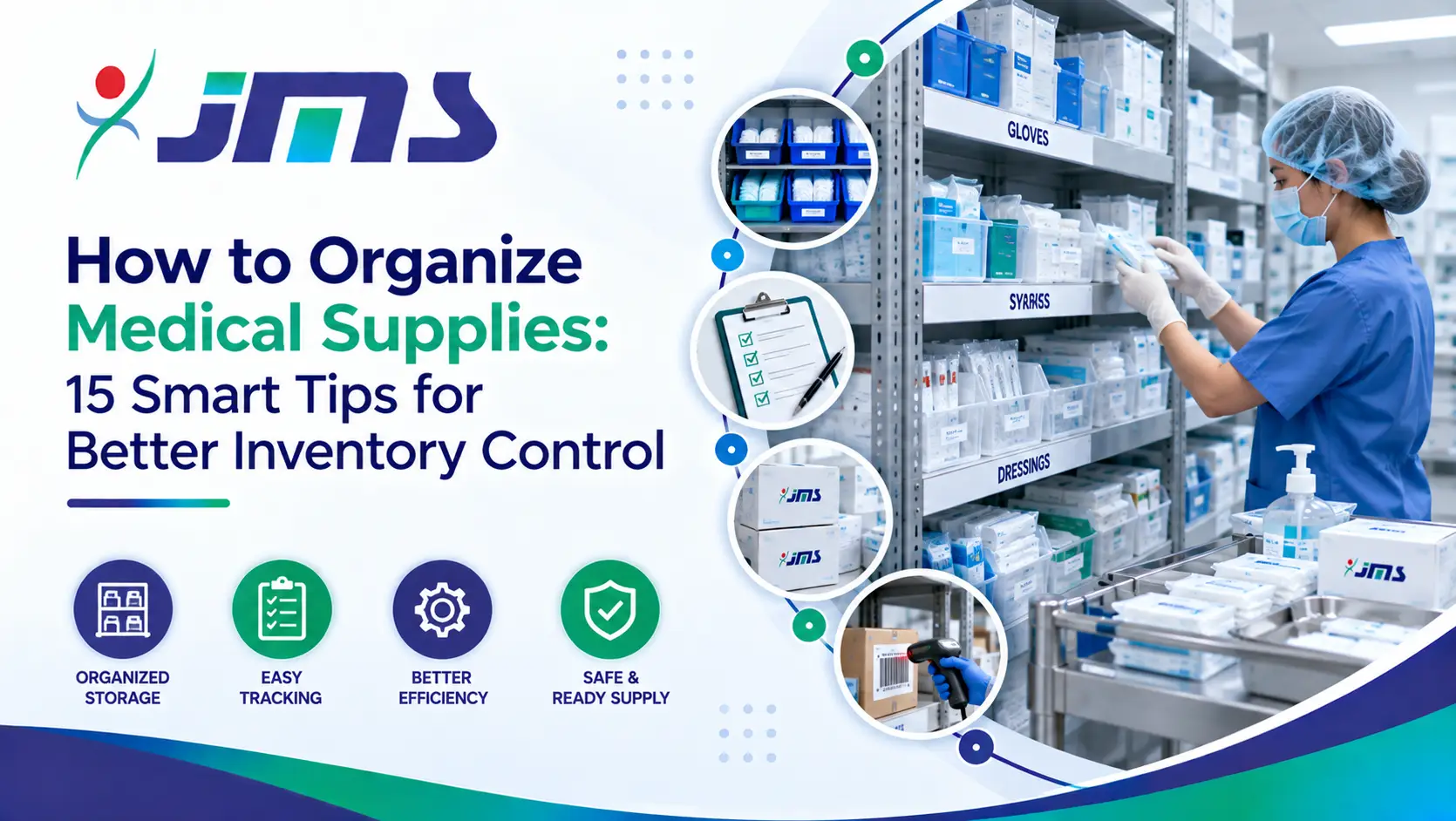
How to Organize Medical Supplies: 15 Smart Tips for Better Inventory Control

Healthcare facilities manage a large variety of medical supplies every day. Hospitals, clinics, nursing homes, diagnostic centres, surgical facilities, and other healthcare organizations may need to maintain inventory ranging from gloves, gauze, cotton, dressings, and medical tapes to orthopedic products, medical devices, and other essential supplies. When these products are not properly organized, staff may spend more time searching for supplies, stock levels can become difficult to monitor, and products approaching expiry may be overlooked. A structured medical supply organization system can make inventory easier to access, monitor, replenish, and manage. The most useful approach is to organize supplies based on several factors, including product category, usage frequency, department, stock level, expiry requirements, and storage needs. Why Is Proper Medical Supply Organization Important? A well-organized medical inventory can help healthcare facilities: Locate supplies more quickly Maintain appropriate stock levels Reduce unnecessary wastage Monitor expiry dates Improve stock rotation Reduce duplicate purchasing Support efficient department operations Protect products from unsuitable storage conditions Improve inventory visibility Good organization is especially important when a facility manages hundreds or thousands of individual products. 1. Organize Medical Supplies by Product Category The first step is to group products according to their type and general function. For example, a healthcare facility could create separate storage sections for: Medical Gloves Different glove types and sizes can be organized together while keeping individual sizes clearly identified. Cotton Products Absorbent cotton, cotton rolls, cotton balls, dental cotton rolls, and other cotton products can be separated according to their specifications. Gauze and Dressings Gauze swabs, gauze rolls, pads, dressings, and other wound-care products can be grouped together. Medical Tapes Surgical tapes, adhesive products, and related items can have their own designated section. Orthopedic Products Casting materials, padding, bandages, and other orthopedic supplies can be organized separately. Medical Devices and Equipment Products such as nebulizer-related equipment, BP products, O2-related products, and other medical devices should be stored according to their specific requirements. Why this helps: Category-based organization makes products easier to locate and reduces confusion between similar-looking items. 2. Organize Supplies by Usage Frequency Not every medical supply is used at the same rate. Some products may be used hundreds of times a week, while others may only be required occasionally. A practical inventory system can classify products into: High-Use Products Examples may include: Examination gloves Gauze Cotton Common dressings Frequently used medical tapes These products should be placed in easily accessible locations. Medium-Use Products These may be needed regularly but less frequently than everyday consumables. They can be stored in nearby but less prominent locations. Low-Use Products Specialized or occasionally required products can be stored in designated areas without taking up prime-access space. Why Usage Frequency Matters Placing frequently used supplies closer to the point of use can: Reduce staff walking time Make replenishment easier Improve workflow Reduce unnecessary handling Make shortages easier to identify The exact placement should always take into account the product’s required storage conditions. 3. Organize Medical Supplies by Department Large healthcare facilities often have multiple departments with different supply requirements. For example: Emergency Department Operation Theatre Outpatient Department Intensive Care Unit Laboratory Dental Department Orthopedic Department Dressing/Wound-Care Area General Ward Supplies can be allocated or organized according to departmental requirements. Example An orthopedic department may regularly require specific orthopedic products, while a dressing area may require larger quantities of gauze, cotton, and dressings. The facility can maintain: Central Inventory → Departmental Stock → Point-of-Use Stock This structure can help the central procurement team maintain overall visibility while allowing individual departments to access frequently needed products. 4. Create Clearly Defined Storage Locations Every product should ideally have a designated storage location. A storage-location system can include: Room → Rack → Shelf → Product → Size/Specification For example: Medical Store → Rack A → Shelf 2 → Examination Gloves → Medium This makes it easier for staff to locate products and return them to the correct place after receiving or issuing stock. Clear shelf labels can include: Product name Size Specification Stock code Storage requirements where relevant 5. Organize by Stock Level Healthcare facilities should maintain enough stock to support normal operations without unnecessarily overstocking products. A simple stock-level system can classify inventory into: Minimum Stock Level The minimum quantity that should generally be maintained before replenishment is required. Reorder Level The point at which a new purchase order should be considered, taking into account usage and supplier lead time. Maximum Stock Level The quantity above which additional stock may create unnecessary storage pressure, expiry risk, or excess inventory. These levels should be established based on actual usage patterns, supplier lead times, storage capacity, and the criticality of the product. 6. Use Stock Rotation for Expiry Management Expiry monitoring is particularly important for healthcare products that have a defined shelf life. A useful approach is FEFO — First Expiry, First Out. Under FEFO, products with the earliest expiry dates are prioritized for use or issue before products with later expiry dates. Example Suppose a healthcare facility has two batches of the same product: Batch A → Expires in March Batch B → Expires in August Batch A should generally be prioritized for use, provided it remains suitable for use. Why FEFO Helps FEFO can help: Reduce expiry-related wastage Improve stock rotation Identify products approaching expiry Improve inventory control 7. Separate Products According to Storage Requirements Not all medical supplies should necessarily be stored under identical conditions. Some products may require particular environmental conditions according to manufacturer instructions. Storage areas can therefore be organized according to requirements such as: General room-temperature storage Products requiring protection from moisture Products requiring protection from light Products requiring specific temperature conditions Products requiring special handling Products requiring controlled or restricted storage Important: Healthcare facilities should always follow the specific manufacturer’s storage instructions and applicable requirements. Do not assign a generic temperature range to a product without checking its labeling or documentation. 8. Protect Packaging During Storage Medical products should be protected from physical and environmental damage. Storage staff should regularly check

How to Organize Medical Supplies: 15 Smart Tips for Better Inventory Control Read More »