
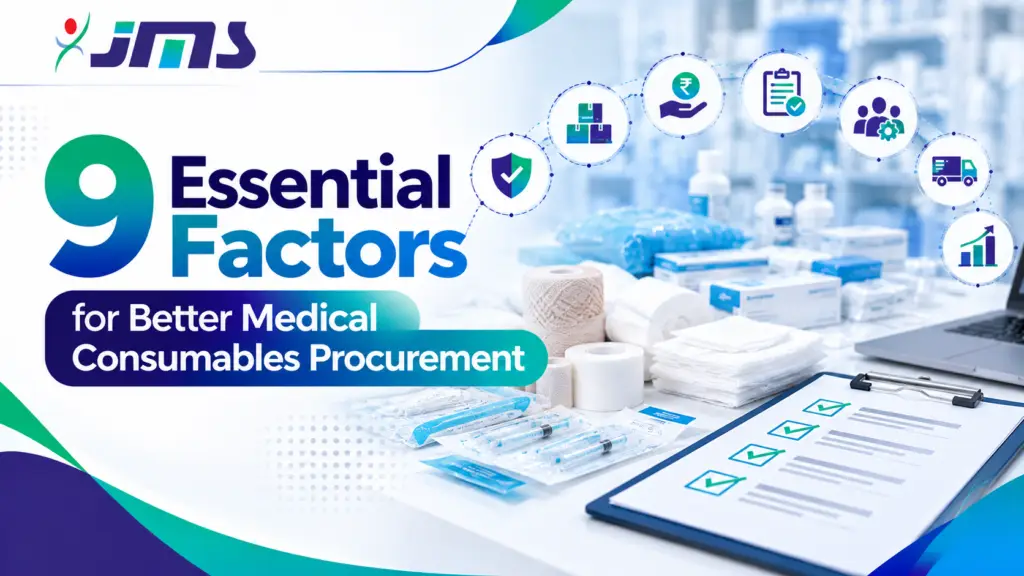
Medical consumables are essential for the daily functioning of hospitals, clinics, diagnostic centres, and other healthcare facilities. From surgical gloves and gauze swabs to cotton rolls, wound dressings, syringes, and disposable medical supplies, these products support routine patient care, infection prevention, and clinical procedures.
However, purchasing medical consumables involves more than comparing prices. Healthcare facilities must consider product quality, safety requirements, supplier reliability, storage conditions, delivery schedules, and overall procurement costs.
A well-planned medical consumables procurement process helps hospitals maintain adequate stock, reduce unnecessary expenditure, and support consistent healthcare operations.
In this guide, we explore nine important factors every hospital should consider when procuring medical consumables.
What Is Medical Consumables Procurement?
Medical consumables procurement is the process of identifying, evaluating, purchasing, receiving, and managing disposable or frequently replenished medical products used in healthcare facilities.
These products may include:
Surgical gloves, masks, and disposable protective equipment
Gauze swabs, absorbent cotton, and wound dressings
Syringes, needles, and other procedure-related consumables
Disposable examination and patient-care supplies
Sterile medical products and surgical consumables
An effective procurement strategy ensures that the right products are available in the right quantities, at the right time, and from suitable suppliers.
1. Evaluate Product Quality and Safety
Product quality should be a primary consideration when purchasing medical consumables. Inconsistent quality can disrupt clinical workflows and create avoidable risks for healthcare providers and patients.
Before placing an order, review the product specifications, intended use, material composition, packaging integrity, and relevant quality documentation.
For products requiring sterility, verify the sterile status, packaging condition, and applicable expiry or use-by information. Hospitals should also confirm that products meet the regulatory and technical requirements applicable to their category and intended use.
Key considerations:
Consistent product specifications
Appropriate quality documentation
Intact packaging and clear labelling
Applicable regulatory compliance
Suitable sterility and expiry information, where relevant
2. Choose a Reliable Medical Consumables Supplier
Supplier reliability directly affects the availability of essential medical products. Delayed deliveries or inconsistent product quality can interfere with hospital operations and increase procurement pressure.
Hospitals should evaluate suppliers based on their product range, supply capacity, order fulfilment history, communication, documentation, and ability to handle recurring requirements.
It is also useful to establish clear expectations for order confirmation, delivery timelines, product substitutions, and the handling of damaged or non-conforming goods.
Key considerations:
Consistent supply availability
Clear communication and order tracking
Transparent commercial terms
Appropriate business and product documentation
A defined process for resolving supply issues
3. Compare Total Procurement Costs, Not Just Prices
The lowest quoted price does not always represent the best value. Differences in product specifications, packaging quantities, shipping charges, minimum order requirements, and defect rates can affect the total cost of purchasing.
Hospitals should compare equivalent products using consistent specifications and calculate the overall cost of acquisition.
Bulk purchasing may reduce the unit price, but only when the products can be used within their shelf life and stored under suitable conditions.
Key considerations:
Unit price and pack size
Shipping and handling charges
Minimum order quantities
Expected product wastage
Storage costs and expiry-related losses
4. Assess Product Specifications and Intended Use
Medical consumables are designed for different clinical applications. Products that appear similar may differ in material, dimensions, absorbency, strength, sterility, or intended use.
For example, gauze products may differ in ply, size, construction, packaging, and sterile status. Protective gloves may vary by material, size, and intended application.
Procurement teams should prepare clear specifications before requesting quotations. This helps prevent unsuitable substitutions and makes supplier comparisons more accurate.
Key considerations:
Material and dimensions
Sterile or non-sterile status
Product performance requirements
Intended clinical application
Compatibility with established hospital protocols
5. Check Certifications and Regulatory Documentation
Medical products may be subject to different regulatory requirements depending on their classification, intended use, and applicable jurisdiction. Hospitals should verify the documentation relevant to the specific product rather than relying on broad or unsupported certification claims.
Where applicable, request product licences, conformity documents, quality certificates, test reports, declarations, and other records required for procurement and institutional audits.
Documentation should be current, relevant to the product being purchased, and consistent with the supplier and product details.
Key considerations:
Applicable licences and registrations
Relevant quality certificates
Product-specific technical documents
Batch or lot information, where applicable
Traceable purchase and delivery records
6. Plan Inventory and Reordering Carefully
Poor inventory management can result in shortages of essential products or excessive stock that ties up working capital. Both situations can affect hospital efficiency.
Hospitals should review historical consumption, current stock, supplier lead times, seasonal demand, and expected changes in patient volume. Reorder levels can then be established for frequently used products.
A first-expiry-first-out approach should be used for applicable products with expiry dates, alongside routine checks for damaged packaging and expired stock.
Key considerations:
Historical usage and consumption trends
Minimum and maximum stock levels
Reorder points and safety stock
Expiry-date monitoring
Regular inventory reconciliation
7. Verify Packaging, Labelling, and Storage Requirements
Packaging protects medical consumables during transport and storage. Damaged packaging, unclear labels, or unsuitable storage conditions may compromise product integrity and usability.
At the time of receipt, hospital staff should check the quantity delivered, product identity, batch or lot details where applicable, expiry information, and packaging condition.
Products should be stored according to the manufacturer’s instructions, including any specified temperature, humidity, light protection, or handling requirements. Sterile products with compromised packaging should be assessed under the facility’s approved procedures and should not be treated as sterile merely because the product appears intact.
Key considerations:
Clear and legible product labels
Intact packaging on receipt
Appropriate storage conditions
Correct batch and expiry information
Safe handling and stock rotation
8. Ensure Consistent Supply and Delivery Timelines
Hospitals need predictable deliveries to maintain continuity of patient care. A supplier’s ability to fulfil recurring orders can be as important as the initial product quotation.
Procurement teams should review lead times, delivery coverage, order-processing procedures, and the supplier’s response to urgent requirements. For critical products, hospitals may consider approved backup suppliers in accordance with internal procurement policies.
Delivery performance should be monitored over time so that recurring delays can be identified and addressed.
Key considerations:
Reliable delivery schedules
Order fulfilment accuracy
Clear communication about delays
Contingency plans for critical supplies
Performance reviews for recurring suppliers
9. Review Long-Term Value and Supplier Performance
Medical consumables procurement should be treated as an ongoing process rather than a series of isolated purchases. Periodic supplier reviews help hospitals understand whether their purchasing arrangements continue to meet operational needs.
Useful performance indicators include on-time delivery rates, product rejection rates, order accuracy, price changes, documentation completeness, and complaint resolution time.
Hospitals can use these indicators to improve supplier selection, negotiate more appropriate purchasing terms, and identify opportunities to reduce waste without compromising product requirements.
Key considerations:
On-time delivery performance
Product quality and rejection rates
Order accuracy
Responsiveness to complaints
Consistency of pricing and documentation
Common Medical Consumables Procurement Mistakes to Avoid
Even an established procurement team can face avoidable challenges. Common mistakes include:
Selecting suppliers solely on the basis of the lowest price
Ordering products without clear specifications
Purchasing more stock than can reasonably be used before expiry
Overlooking product-specific documentation
Failing to inspect deliveries upon receipt
Depending on a single supplier without an appropriate contingency plan
Ignoring recurring delivery delays or quality complaints
Standardised procurement procedures, accurate inventory records, and regular supplier evaluations can help reduce these problems.
Conclusion
Medical consumables procurement plays an important role in maintaining hospital efficiency, managing purchasing costs, and supporting reliable patient-care operations. By evaluating product quality, supplier reliability, total costs, specifications, documentation, inventory, packaging, delivery performance, and long-term value, hospitals can make more informed purchasing decisions.
A structured procurement process also helps healthcare facilities identify supply risks early and maintain better control over essential medical products.
For hospitals, clinics, and healthcare organisations, working with dependable medical supply partners and maintaining clear purchasing standards can support a more consistent and efficient supply chain.
About JMS Medicon Private Limited
JMS Medicon Private Limited supports healthcare supply requirements through its medical and healthcare product offerings. Healthcare organisations can contact the company to discuss product availability, specifications, and procurement requirements.
Contact Details
Email: jmsmedicon@gmail.com
Phone: +91 9437040988
Office Address: Plot No-85, Padmalava Nagar, Trisulia, Cuttack, Odisha – 754005
Registered Address: H-1370 DSIDC Industrial Complex, Narela, Delhi – 110040
Website: https://jmsmedicon.com/
