
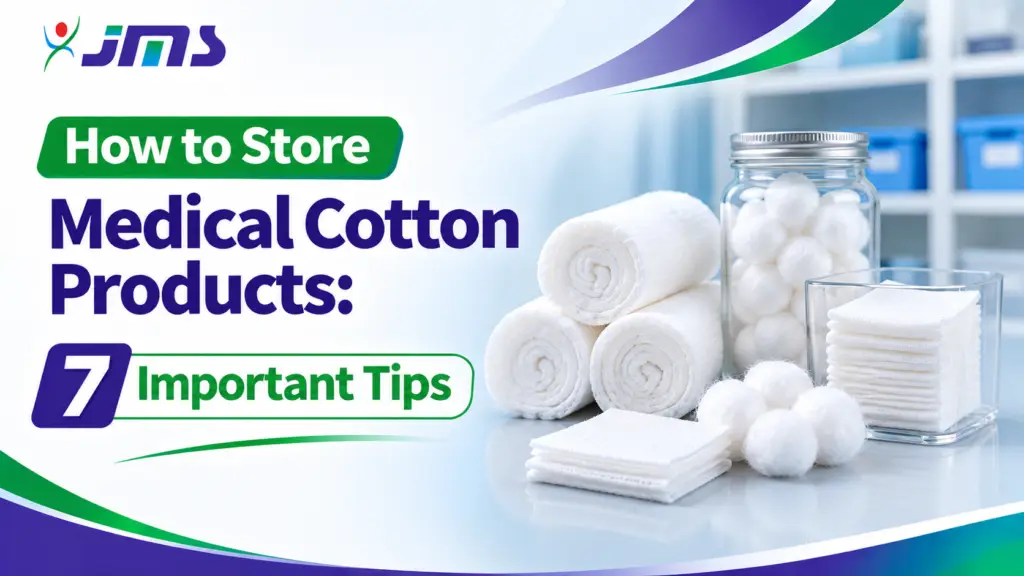
Medical cotton products are widely used in hospitals, clinics, nursing homes, diagnostic centres, and other healthcare facilities. From wound cleaning and dressing applications to general medical care, these products support several routine healthcare activities.
However, maintaining the quality and hygiene of medical cotton products requires proper storage, handling, and inventory management. Exposure to dust, moisture, contamination, and unsuitable storage conditions can affect product quality and packaging integrity.
For healthcare facilities and medical supply distributors, understanding the correct storage practices is important for maintaining product usability and supporting safe healthcare operations.
In this blog, we explore seven practical tips to maintain the hygiene, quality, and proper storage of medical cotton products.
1. Store Medical Cotton Products in a Clean Environment
A clean storage environment is essential for maintaining the condition of medical cotton products.
Cotton products can be affected by dust, dirt, moisture, and other environmental contaminants if they are not stored properly.
Follow these practices:
Keep storage areas clean and organized.
Avoid storing cotton products near waste disposal areas.
Protect products from dust and dirt.
Clean storage shelves regularly.
Keep products away from potential contamination sources.
A hygienic storage environment helps protect medical supplies until they are required.
2. Protect Products From Moisture and Humidity
Moisture can affect the condition of medical cotton products and their packaging. Excessive humidity may also encourage microbial growth.
Healthcare facilities should:
Store products in dry areas.
Avoid damp storage rooms.
Check packaging for signs of moisture damage.
Keep products away from water sources.
Follow the manufacturer’s recommended storage conditions.
Products with damaged or moisture-affected packaging should be assessed before use and handled according to facility procedures.
3. Maintain Proper Packaging Integrity
Packaging plays an important role in protecting medical cotton products during transportation, storage, and handling.
Before using or storing these products, check:
Whether the packaging is properly sealed.
Whether there are visible tears or punctures.
Whether the product label is readable.
Whether the batch number is available.
Whether the expiry date is clearly mentioned, where applicable.
Sterile cotton products require particular attention to packaging integrity. Damaged sterile packaging should not be considered suitable for sterile use.
4. Follow the Correct Storage Instructions
Different medical cotton products may have different storage requirements depending on their material, packaging, and intended application.
For proper storage:
Follow the manufacturer’s instructions.
Avoid direct sunlight.
Keep products away from excessive heat.
Use suitable shelves or storage cabinets.
Prevent unnecessary handling.
Separate sterile and non-sterile products.
Healthcare facilities should ensure that medical cotton products remain in their original packaging until required.
5. Organize Inventory and Monitor Expiry Dates
Effective inventory management helps healthcare facilities maintain product availability and reduce unnecessary wastage.
Some useful practices include:
Maintain a record of received stock.
Check manufacturing and expiry dates.
Follow the First Expiry, First Out (FEFO) method.
Monitor stock levels regularly.
Separate expired or damaged products.
Maintain batch identification records.
A well-organized inventory system makes it easier to identify products that need replacement.
6. Follow Proper Handling Practices
Medical cotton products should be handled carefully to reduce the risk of contamination.
Healthcare facilities should encourage staff to:
Perform hand hygiene before handling products.
Avoid touching unused cotton unnecessarily.
Use clean handling procedures.
Keep opened packages protected according to manufacturer instructions.
Avoid mixing used and unused materials.
Dispose of contaminated cotton according to applicable biomedical waste guidelines.
These practices help maintain hygiene during routine healthcare activities.
7. Choose Reliable Medical Cotton Product Suppliers
Product quality begins with selecting suitable medical cotton products from dependable suppliers.
Healthcare facilities should evaluate suppliers based on:
Product specifications and intended use.
Material quality and absorbency.
Packaging standards.
Batch traceability.
Applicable certifications and documentation.
Consistency of product availability.
Storage and transportation practices.
Working with reliable medical product suppliers helps healthcare organizations maintain their procurement requirements and product quality expectations.
Common Types of Medical Cotton Products Used in Healthcare
Different medical cotton products are designed for different applications.
1. Absorbent Cotton
Absorbent cotton is commonly used in healthcare settings for cleaning, dressing preparation, and other suitable medical applications.
2. Sterile Cotton Products
Sterile cotton products are supplied in packaging designed to maintain sterility until opened. They are used in applications where sterile materials are required.
3. Cotton Rolls
Cotton rolls are used in selected medical and dental applications for absorption and moisture management.
4. Cotton Gauze Products
Cotton gauze products are commonly used for wound dressing, covering, and absorption, depending on their design and specifications.
Healthcare professionals should select products according to their intended applications and manufacturer instructions.
Why Medical Cotton Product Quality Matters
Maintaining the quality of medical cotton products is important for several reasons:
Hygiene: Appropriate storage and handling help protect products from contamination.
Product Performance: Maintaining suitable storage conditions helps preserve product characteristics.
Patient Care: Appropriate product selection supports routine medical and dressing procedures.
Inventory Management: Proper stock rotation reduces unnecessary wastage.
Procurement Efficiency: Reliable sourcing supports consistent availability of medical supplies.
Healthcare facilities should remember that sterile and non-sterile cotton products are not interchangeable. Always select products according to clinical requirements.
Conclusion
Medical cotton products are essential supplies in many healthcare environments. Maintaining their hygiene and quality requires proper storage, packaging checks, moisture control, careful handling, and regular inventory monitoring.
Hospitals, clinics, and medical supply distributors should follow manufacturer recommendations and establish suitable storage procedures to protect product quality.
Choosing dependable medical cotton products and maintaining organized procurement practices can help healthcare facilities manage their medical consumables more effectively.
About JMS Medicon Private Limited
JMS Medicon Private Limited is committed to supporting healthcare facilities with medical and surgical products for their procurement requirements. We aim to help hospitals, clinics, and healthcare organizations access suitable medical supplies.
For product-related enquiries and business information, contact our team.
Contact Details
Email: jmsmedicon@gmail.com
Phone: +91 9437040988
Office Address:
Plot No-85, Padmalava Nagar, Trisulia, Cuttack, Odisha – 754005
Registered Address:
H-1370 DSIDC Industrial Complex, Narela, Delhi – 110040
Website: https://jmsmedicon.com/
