
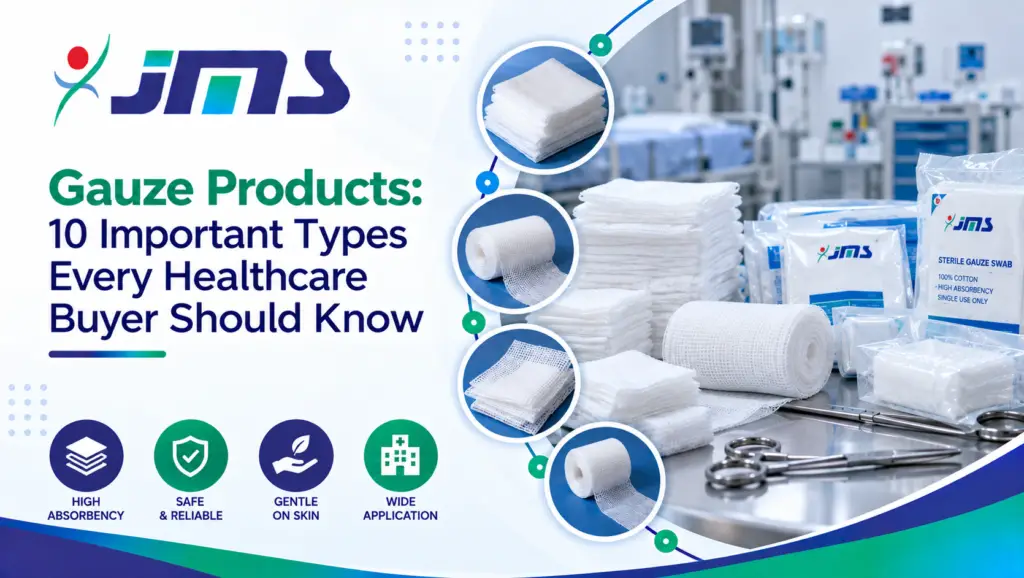
Gauze is one of the most commonly used medical consumables in healthcare settings. Hospitals, clinics, nursing homes, diagnostic centres, surgical facilities, and other healthcare organizations may use different types of gauze for wound care, cleaning, dressing, fluid absorption, and procedural applications.
However, gauze is not a single standardized product format. It is available in different constructions, sizes, layers, packaging formats, and configurations. Some gauze products are designed for general cleaning and dressing, while others are intended for specific applications.
Understanding the differences between gauze formats can help healthcare buyers select products according to their intended use.
What Is Medical Gauze?
Medical gauze is a textile-based healthcare material commonly used for wound management and other clinical applications. It can be manufactured in different constructions and supplied in various sizes and packaging formats.
Depending on the product, gauze may be:
- Woven or non-woven
- Sterile or non-sterile
- Folded or rolled
- Single-layer or multi-layer
- Supplied as swabs, sponges, rolls, or sheets
- Designed for general or specific healthcare applications
The appropriate type depends on the clinical requirement, product specifications, and applicable healthcare protocols.
Common Gauze Product Formats
The most commonly encountered gauze formats include:
- Gauze Swabs
- Gauze Sponges
- Gauze Rolls
- Gauze Bandages
- Gamjee Rolls
- Gauze Pads and Dressings
- Sterile Gauze
- Non-Sterile Gauze
- Woven Gauze
- Non-Woven Gauze
Not every healthcare supplier will offer every format, and terminology can vary between manufacturers. Buyers should therefore review the actual product specifications rather than relying only on the product name.
1. Gauze Swabs
Gauze swabs are small, folded pieces of gauze commonly used for cleaning, dressing, and absorbing fluids.
They are available in different sizes and may be supplied as sterile or non-sterile products depending on the intended application.
Characteristics
Typical characteristics can include:
- Compact format
- Folded construction
- Different sizes
- Different layer configurations
- Absorbent structure
- Sterile or non-sterile options
Common Applications
Gauze swabs may be used for:
- Wound cleaning
- Dressing changes
- Absorbing fluids
- Applying antiseptic solutions
- General clinical procedures
Buyer Considerations
Healthcare buyers should consider:
- Size
- Number of layers
- Material
- Absorbency
- Sterility status
- Packaging
- Intended application
2. Gauze Sponges
Gauze sponges are designed to provide a larger surface area than smaller swabs and can be used for various wound-care and procedural applications.
Characteristics
They may differ in:
- Dimensions
- Number of layers
- Construction
- Absorbency
- Packaging format
- Sterility
Common Applications
Gauze sponges can be used for:
- Wound dressing
- Fluid absorption
- Cleaning treatment areas
- General procedural applications
Larger sponge formats can be useful when more surface coverage or fluid absorption is required.
Buyer Considerations
Buyers should check the product’s dimensions, layers, material, packaging, and intended application.
3. Gauze Rolls
Gauze rolls are supplied in a continuous rolled format and can be cut or applied according to the requirements of the procedure.
They can be useful when a larger amount of gauze is needed.
Characteristics
Gauze rolls may vary by:
- Width
- Length
- Number of layers
- Material
- Weave or construction
- Packaging
Common Applications
They may be used for:
- Wound dressing
- Securing dressings
- General wound-care support
- Wrapping and coverage
- Clinical procedures
Buyer Considerations
Healthcare buyers should consider the required width, length, absorbency, construction, packaging, and intended use.
4. Gauze Bandages
Gauze bandages are designed primarily for wrapping, dressing support, and securing wound-care materials.
They may be available in different widths and lengths.
Characteristics
Important characteristics can include:
- Width
- Length
- Stretch or flexibility, depending on the product
- Material
- Construction
- Packaging
Common Applications
Gauze bandages may be used for:
- Securing dressings
- Supporting wound coverings
- General bandaging
- Wrapping affected areas
They should not be confused with specialized compression or elastic bandages, which have different characteristics and intended applications.
5. Gamjee Rolls
Gamjee Rolls are a specialized dressing format that generally combines an absorbent cotton layer with a gauze covering.
This construction provides an absorbent dressing material that can be useful for certain wound-care applications.
Characteristics
Gamjee Rolls generally feature:
- Absorbent cotton component
- Gauze covering
- Rolled format
- Larger dressing surface
- Absorbent construction
Common Applications
They may be used for:
- Wound dressing
- Absorbing wound exudate
- Post-procedure dressing
- General wound-care applications
The appropriate use depends on the product specifications and healthcare professional’s requirements.
Buyer Considerations
Healthcare buyers can evaluate:
- Cotton quality
- Absorbency
- Roll dimensions
- Gauze construction
- Packaging
- Sterility status, where applicable
- Intended application
6. Gauze Pads and Dressings
Gauze pads are commonly supplied in ready-to-use folded formats.
Their pre-cut and folded construction can make them convenient for routine wound-care applications.
Characteristics
They may vary in:
- Size
- Layer count
- Material
- Absorbency
- Sterility
- Packaging
Common Applications
Gauze pads can be used for:
- Wound dressing
- Cleaning wounds
- Absorbing fluids
- Covering wounds
- Supporting routine clinical procedures
Buyer Considerations
The correct size and format should be selected based on the intended application.
For sterile products, packaging integrity and expiry information are particularly important.
7. Sterile Gauze
Sterile gauze is processed and packaged to meet the applicable requirements for sterile products.
It may be supplied in individually packaged formats or other controlled packaging configurations.
Characteristics
Sterile gauze can provide:
- Controlled sterile packaging
- Ready-to-use format
- Different sizes and layers
- Various gauze constructions
Common Applications
Depending on the product, sterile gauze may be used for:
- Wound dressing
- Post-operative care
- Certain clinical procedures
- Wound cleaning
- Covering wounds
Important Consideration
Sterility depends not only on the manufacturing process but also on maintaining the integrity of the sterile package.
Healthcare staff should inspect packaging before use and follow the manufacturer’s instructions and facility protocols.
8. Non-Sterile Gauze
Non-sterile gauze is generally intended for applications where sterile gauze is not specifically required.
Characteristics
It can be available in:
- Different sizes
- Different layers
- Various constructions
- Rolls or folded formats
Common Applications
Depending on the product, non-sterile gauze may be used for:
- General cleaning
- General dressing support
- Routine healthcare applications
- Certain non-sterile procedures
Healthcare professionals should determine whether sterile or non-sterile products are appropriate for the particular application.
9. Woven Gauze
Woven gauze is produced using interlaced textile fibers.
Its construction can provide a particular combination of flexibility, strength, and absorbency depending on the material and manufacturing specifications.
Characteristics
Woven gauze may offer:
- Traditional textile construction
- Flexibility
- Defined weave pattern
- Different thread counts
- Different layers
Common Applications
It may be used for:
- Wound dressing
- Cleaning
- Fluid absorption
- General clinical procedures
Buyer Considerations
Buyers may review:
- Material
- Thread count
- Construction
- Absorbency
- Dimensions
- Layer count
- Sterility
- Packaging
10. Non-Woven Gauze
Non-woven gauze is manufactured using fibers bonded or formed into a sheet rather than the traditional woven structure.
The characteristics can vary significantly depending on the materials and manufacturing process.
Characteristics
Non-woven gauze may provide:
- Soft texture
- Consistent construction
- High absorbency depending on material
- Low-lint characteristics depending on product design
- Different levels of thickness and absorbency
Common Applications
Depending on the product, non-woven gauze can be used for:
- Wound care
- Cleaning
- Dressing
- Fluid absorption
- General medical procedures
Healthcare buyers should compare the manufacturer’s specifications rather than assuming all non-woven gauze products have identical characteristics.
Gauze Product Comparison
| Gauze Format | General Characteristics | Common Applications |
|---|---|---|
| Gauze Swabs | Compact, folded format | Cleaning, dressing, fluid absorption |
| Gauze Sponges | Larger surface area | Wound care, procedures, absorption |
| Gauze Rolls | Continuous rolled format | Dressing, wrapping, wound care |
| Gauze Bandages | Designed for wrapping/support | Securing dressings, bandaging |
| Gamjee Rolls | Cotton layer with gauze covering | Wound dressing and absorption |
| Gauze Pads | Pre-cut and folded | Wound dressing, cleaning |
| Sterile Gauze | Sterile packaged format | Wound care and selected procedures |
| Non-Sterile Gauze | General-purpose format | Routine non-sterile applications |
| Woven Gauze | Interlaced textile construction | Dressing, cleaning, absorption |
| Non-Woven Gauze | Fiber-based non-woven construction | Dressing, cleaning, fluid absorption |
These are general descriptions. Actual product characteristics can vary between manufacturers and individual product specifications.
How to Choose the Right Gauze Product
Healthcare buyers should start with the intended application rather than selecting gauze based only on price.
1. Consider the Intended Use
Determine whether the product is needed for:
- Wound cleaning
- Wound dressing
- Fluid absorption
- General clinical procedures
- Post-operative care
- Securing dressings
- Dental or other specialized applications
The intended use helps determine the appropriate gauze format.
2. Check the Size
Gauze is available in multiple dimensions.
Selecting the correct size can help healthcare professionals use the product efficiently and avoid unnecessary wastage.
3. Evaluate Absorbency
For applications involving fluid absorption, absorbency can be an important consideration.
However, absorbency requirements differ between applications, so buyers should compare manufacturer specifications rather than assuming that all gauze products perform identically.
4. Check Layer Configuration
Some gauze products are available in different numbers of layers.
The appropriate configuration depends on the intended application and product specifications.
5. Sterile vs Non-Sterile
Healthcare buyers should determine whether sterile gauze is required for the intended application.
Sterile products should remain protected in their original packaging until use, and packaging integrity should be checked before opening.
6. Packaging and Labelling
Packaging should protect the product during transportation and storage.
Buyers should check:
- Product identification
- Size
- Quantity
- Batch or lot information
- Expiry or shelf-life information where applicable
- Sterility information where applicable
- Packaging integrity
7. Manufacturer Reliability
A dependable manufacturer can provide consistency in product specifications, packaging, supply, and documentation.
For healthcare organizations purchasing products regularly, supplier reliability can be an important part of procurement planning.
Proper Storage of Gauze Products
Gauze products should be stored according to the manufacturer’s instructions.
As a general principle, healthcare facilities should:
- Keep storage areas clean
- Protect products from moisture
- Avoid excessive heat
- Follow specified temperature conditions
- Protect packaging from damage
- Keep products away from potential contaminants
- Organize products by type and size
- Monitor expiry dates
- Follow FEFO (First Expiry, First Out) where appropriate
For sterile gauze, maintaining packaging integrity is particularly important.
Why Packaging Integrity Matters
For healthcare products, packaging can serve an important protective function.
A damaged package may expose the product to environmental conditions that could affect its suitability.
Healthcare staff should inspect gauze packaging for:
- Tears
- Punctures
- Open seals
- Moisture damage
- Crushing
- Unclear labels
Products with compromised packaging should be managed according to the facility’s established quality and safety procedures.
JMS Medicon and Gauze Product Requirements
JMS Medicon offers a range of healthcare and medical products, including gauze-related products for healthcare requirements.
Its broader product portfolio includes cotton products, gauze products, medical gloves, tapes and orthopedic products, nebulizer/BP/O2 products, and surgical and medical devices.
For healthcare buyers, understanding the differences between gauze formats can help make procurement decisions based on application, product characteristics, packaging, and supply requirements.
Rather than selecting a gauze product solely because it is inexpensive or commonly used, healthcare organizations should match the product to its intended purpose and review the manufacturer’s specifications.
Gauze Buying Checklist for Healthcare Facilities
Before purchasing gauze products, buyers can check:
✓ Intended application
✓ Gauze format
✓ Size and dimensions
✓ Number of layers
✓ Material and construction
✓ Absorbency requirements
✓ Sterile or non-sterile status
✓ Packaging format
✓ Batch/lot information
✓ Expiry or shelf-life information
✓ Storage requirements
✓ Applicable quality and regulatory documentation
✓ Supplier availability
✓ Consistency of product specifications
Conclusion
Gauze products are available in a wide variety of formats, including swabs, sponges, rolls, bandages, pads, Gamjee Rolls, sterile gauze, non-sterile gauze, woven gauze, and non-woven gauze.
Each format can have different characteristics and applications. The right choice depends on factors such as intended use, size, layers, absorbency, material, sterility, packaging, storage requirements, and product specifications.
For healthcare buyers, understanding these differences can make procurement more informed and help ensure that the selected gauze product is appropriate for the intended healthcare application.
A dependable medical manufacturer and supplier can further support healthcare organizations through consistent product specifications, appropriate packaging, documentation, and reliable supply.
Looking for Gauze and Other Medical Products?
JMS Medicon supports healthcare product requirements with a range of medical and healthcare supplies.
JMS Medicon Private Limited
Email: jmsmedicon@gmail.com
Phone: +91 9437040988
Office Address:
Plot No-85, Padmalava Nagar, Trisulia, Cuttack, Odisha – 754005
Registered Address:
H-1370 DSIDC Industrial Complex, Narela, Delhi – 110040
Website: www.jmsmedicon.com
