
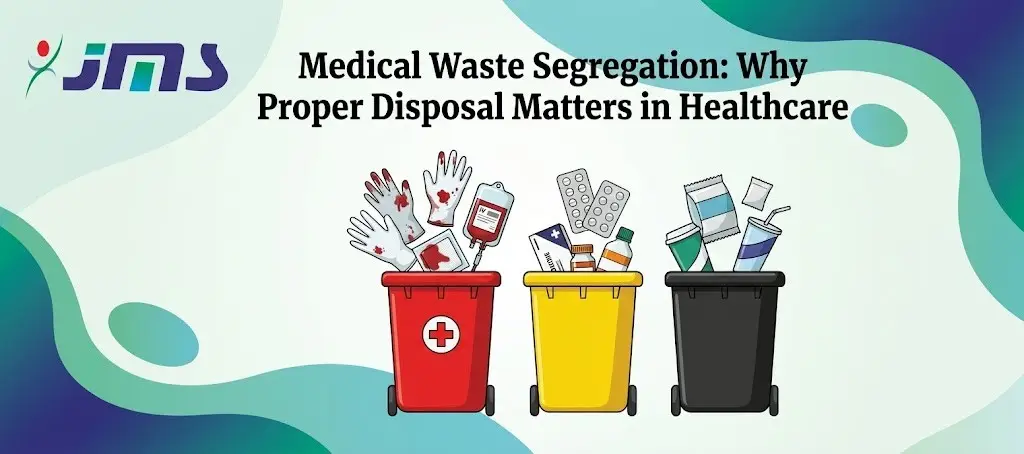
Medical Waste Segregation plays an important role in maintaining safety and hygiene in healthcare facilities. Proper Medical Waste Disposal and effective Healthcare Waste Management help reduce contamination risks and protect healthcare workers, patients, and the environment. Following correct Biomedical Waste Segregation practices and ensuring Safe Medical Waste Disposal can support a cleaner and safer healthcare system.
Medical waste is generated every day in hospitals, clinics, laboratories, and other healthcare facilities. It may include used dressings, contaminated materials, syringes, medical plastics, and other healthcare waste.
However, medical waste cannot always be handled like regular household waste. Improper disposal may increase the risk of infection, injuries, and environmental pollution.
Therefore, medical waste segregation is an important part of healthcare safety. By separating waste correctly at the point of generation, healthcare facilities can support safer handling, treatment, and disposal.
What Is Medical Waste Segregation?
Medical waste segregation is the process of separating different types of healthcare waste into suitable containers or bags.
The waste is separated based on its type and disposal requirements.
For example, healthcare waste may include:
• Infectious waste
• Contaminated medical materials
• Sharps and needles
• Medical plastic waste
• Glassware
• General non-medical waste
Moreover, proper segregation helps prevent different waste categories from being mixed together.
Why Proper Medical Waste Disposal Is Important
Healthcare waste may contain harmful microorganisms, contaminated materials, or sharp objects.
If it is handled incorrectly, it may create safety risks for patients, healthcare workers, waste handlers, and the public.
Proper disposal helps:
• Reduce the risk of infection
• Prevent injuries from medical sharps
• Improve healthcare hygiene
• Support safe waste treatment
• Reduce environmental contamination
Therefore, responsible medical waste management is essential for safer healthcare facilities.
Common Types of Medical Waste
Different healthcare activities generate different types of waste.
Common examples include:
• Used gauze and dressings
• Contaminated cotton materials
• Syringes and needles
• Gloves and medical plastics
• Medicine-related waste
• Glass bottles and vials
• Laboratory waste
Additionally, general waste such as paper and food waste should be kept separate from biomedical waste.
Importance of Segregating Waste at the Source
Medical waste should be separated where it is generated.
This may include patient rooms, operation theatres, laboratories, treatment areas, and other clinical spaces.
Segregating waste at the source helps:
• Prevent unnecessary mixing of waste
• Improve waste collection
• Support safer transportation
• Reduce handling risks
• Make treatment and disposal more efficient
As a result, healthcare workers play an important role in proper waste segregation.
Colour-Coded Waste Segregation in Healthcare
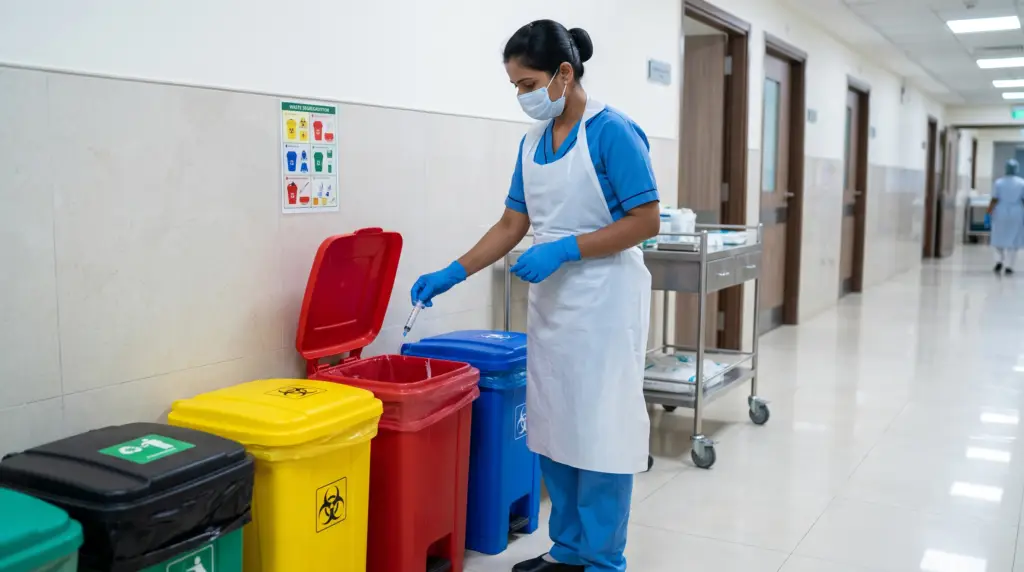
Colour-coded containers and bags help healthcare workers identify different biomedical waste categories.
Under India’s biomedical waste management framework, waste is segregated into specified colour-coded categories, including yellow, red, white, and blue.
Each category is intended for specific types of biomedical waste.
Therefore, healthcare facilities should follow applicable waste management guidelines and ensure that staff understand the correct segregation process.
Risks of Improper Medical Waste Disposal
Improper waste disposal may create several health and environmental risks.
These may include:
• Spread of infections
• Needle-stick injuries
• Exposure to contaminated materials
• Unsafe reuse of medical waste
• Soil and water contamination
• Increased risk for waste handlers
Consequently, poor waste management can affect both healthcare safety and the surrounding environment.
Role of Healthcare Workers in Waste Management
Healthcare workers are directly involved in the generation and handling of medical waste.
Therefore, proper training and awareness are important.
Healthcare staff should:
• Identify different waste categories
• Use the correct waste containers
• Avoid mixing biomedical and general waste
• Handle sharps carefully
• Follow facility waste management procedures
Furthermore, regular training can help improve waste segregation practices across healthcare facilities.
Safe Handling of Sharps and Needles
Needles, blades, and other sharp medical items require careful handling.
These items may cause injuries and increase the risk of exposure to contaminated blood or body fluids.
For safer handling:
• Use designated puncture-resistant containers
• Dispose of sharps immediately after use
• Avoid placing sharps in general waste bins
• Follow established healthcare safety procedures
Thus, proper sharps disposal helps protect healthcare workers and waste handlers.
How Proper Segregation Supports Infection Control
Infection control is a major priority in hospitals and clinics.
Medical waste segregation supports infection prevention by reducing unnecessary contact with contaminated materials.
It can help:
• Maintain cleaner healthcare environments
• Reduce exposure to infectious waste
• Improve safe waste handling
• Support hospital hygiene practices
• Protect healthcare staff and patients
Therefore, effective waste segregation is closely connected with better healthcare safety.
Environmental Benefits of Proper Medical Waste Disposal
Medical waste management is not only important for healthcare facilities. It also affects the environment.
Incorrect disposal may contribute to soil, water, and environmental contamination.
On the other hand, proper waste segregation can support:
• Safer waste treatment
• Better recycling of suitable materials
• Reduced environmental contamination
• Responsible healthcare waste management
• Improved sustainability practices
As a result, healthcare facilities can contribute to both patient safety and environmental protection.
Common Medical Waste Segregation Mistakes
Even simple mistakes can affect the waste management process.
Common errors include:
• Mixing general and biomedical waste
• Using incorrect waste containers
• Overfilling waste bags or containers
• Disposing of sharps incorrectly
• Poor labelling of waste containers
• Lack of staff training
However, regular monitoring and proper training can help reduce these mistakes.
Importance of Quality Medical Consumables
Quality medical consumables support safer healthcare practices.
Reliable products such as medical cotton, gauze, dressings, and other healthcare supplies help professionals maintain proper hygiene and patient care standards.
Moreover, using dependable medical products can support efficient healthcare operations and safer clinical practices.
Trusted Medical and Healthcare Products by JMS Medicon
Looking for reliable medical and healthcare products?
📍 JMS Medicon Private Limited
Plot No-85, Padmalava Nagar, Trisulia,
Cuttack, Odisha – 754005
📞 Phone: +91 9437040988
📧 Email: jmsmedicon@gmail.com
🌐 Website: jmsmedicon.com
Supporting Safer Healthcare Through Responsible Waste Management
Medical waste segregation is an essential part of healthcare safety and hygiene. Proper separation, handling, and disposal of healthcare waste can help reduce infection risks, prevent injuries, and protect the environment.
By following proper waste management practices and using reliable medical supplies, healthcare facilities can create safer environments for patients, healthcare professionals, and waste handlers.
