
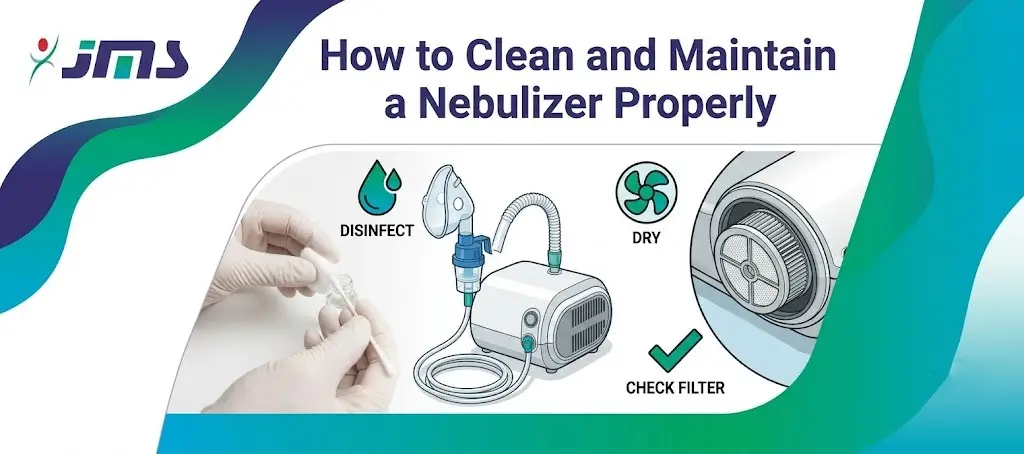
How to Clean and Maintain a Nebulizer Properly
Nebulizers are commonly used to deliver prescribed medicines directly into the lungs. They can be useful for people who need inhaled medication but may have difficulty using certain inhalers correctly. However, a nebulizer needs proper cleaning and maintenance after use. Medicine residue, moisture, and microorganisms can build up inside the equipment if it is not cleaned properly. Therefore, regular cleaning is important for maintaining the hygiene and performance of the device. Whether used at home, in a clinic, or in a hospital, knowing how to clean and maintain a nebulizer properly can help support safer respiratory care. What Is a Nebulizer? A nebulizer is a medical device that changes liquid medicine into a fine mist. The patient then breathes this mist through a mouthpiece or mask so that the medicine can reach the lungs. A typical nebulizer setup may include: • Compressor• Medicine cup• Tubing• Mouthpiece or mask• Air filter, depending on the device Because several parts are involved, each component should be handled and maintained according to the manufacturer’s instructions. Why Is Nebulizer Cleaning Important? A nebulizer comes into contact with medication, moisture, and the patient’s breathing passages. As a result, its components can become contaminated when they are not cleaned properly. Regular cleaning can help: • Reduce the buildup of medicine residue• Maintain better equipment hygiene• Reduce contamination risks• Keep the nebulizer ready for the next use• Support proper delivery of prescribed medication• Extend the useful life of suitable components Therefore, cleaning should be considered an important part of routine nebulizer care. When Should You Clean a Nebulizer? The nebulizer should generally be cleaned after each use, unless the manufacturer provides different instructions. After completing a treatment, leftover medicine should not simply be left inside the medicine cup. Instead, the reusable components should be cleaned as directed. In addition, some nebulizer parts may require regular disinfection or replacement. The exact schedule can vary depending on the device and manufacturer. How to Clean a Nebulizer After Each Use Cleaning a nebulizer does not have to be complicated. However, the steps should be followed carefully. A basic cleaning routine may include: • Turn off the nebulizer and disconnect it from the power supply.• Separate the removable components according to the manufacturer’s instructions.• Empty any remaining medication from the medicine cup.• Clean the reusable parts as instructed by the manufacturer.• Rinse applicable components with clean water when recommended.• Allow the components to air-dry completely in a clean area.• Reassemble the device only after the parts are completely dry. Importantly, do not wash the compressor, electrical components, or tubing unless the manufacturer specifically states that they are washable. How to Disinfect Nebulizer Components Regular cleaning and disinfection are not always the same thing. Cleaning removes visible residue and dirt, while disinfection is intended to reduce microorganisms on suitable equipment surfaces. Some nebulizer components may require periodic disinfection based on the manufacturer’s instructions. Depending on the device, the manufacturer may recommend a particular disinfecting method. Therefore, users should always follow the instructions supplied with their nebulizer rather than using household cleaning products without checking first. How to Clean the Nebulizer Mask or Mouthpiece The mask or mouthpiece comes into direct contact with the user’s face or mouth. Therefore, these components require careful cleaning. After use: • Separate the mask or mouthpiece from the nebulizer.• Clean it according to the manufacturer’s instructions.• Rinse it if the instructions recommend rinsing.• Place it in a clean area to air-dry completely.• Store it in a clean, dry location after drying. Furthermore, these components should not be shared between people unless they are specifically designed and approved for such use with appropriate cleaning and disinfection procedures. What About the Nebulizer Tubing? Nebulizer tubing connects the compressor to the medicine cup and plays an important role in the system. However, tubing should not automatically be washed or submerged in water. Moisture inside the tubing can interfere with proper operation and may encourage contamination. Therefore, follow the manufacturer’s instructions regarding tubing care. If the tubing becomes visibly contaminated, damaged, or difficult to use, it may need to be replaced. How to Keep the Nebulizer Dry Moisture is one of the important factors to consider when maintaining a nebulizer. After cleaning, reusable components should be allowed to dry completely before storage. To maintain better hygiene: • Place cleaned parts on a clean, dry surface.• Allow them to air-dry completely.• Avoid storing wet components inside a closed container.• Keep the equipment away from dust and moisture.• Store the device according to the manufacturer’s recommendations. As a result, proper drying can help maintain cleaner equipment between treatments. How to Maintain the Nebulizer Compressor The compressor is the main electrical unit of many nebulizers. Unlike removable components, it should not be washed or submerged in water. Instead, users should: • Keep the compressor on a clean and dry surface.• Wipe the exterior according to the manufacturer’s instructions.• Keep the air vents free from dust and obstruction.• Check the power cord and plug for visible damage.• Follow the recommended maintenance instructions. If the compressor develops unusual sounds, overheating, or other problems, it should be inspected according to the manufacturer’s guidance. When Should Nebulizer Parts Be Replaced? Nebulizer components do not necessarily last forever. Some parts may need regular replacement depending on the device, frequency of use, and manufacturer’s recommendations. Replacement may be necessary if a component is: • Cracked or damaged• Discoloured or visibly contaminated• Difficult to clean• Showing signs of wear• Not functioning properly• Past the manufacturer’s recommended replacement period Therefore, users should check the product manual and replace components when required. Common Nebulizer Cleaning Mistakes to Avoid Even when users clean their nebulizers regularly, certain mistakes can affect equipment hygiene. Avoid: • Leaving medication inside the medicine cup• Storing components while they are still wet• Using unsuitable household cleaning chemicals• Washing electrical components• Ignoring damaged or cracked parts• Using expired or contaminated supplies• Sharing equipment without appropriate cleaning and disinfection Additionally, users should avoid modifying the nebulizer or its components without
How to Clean and Maintain a Nebulizer Properly Read More »