
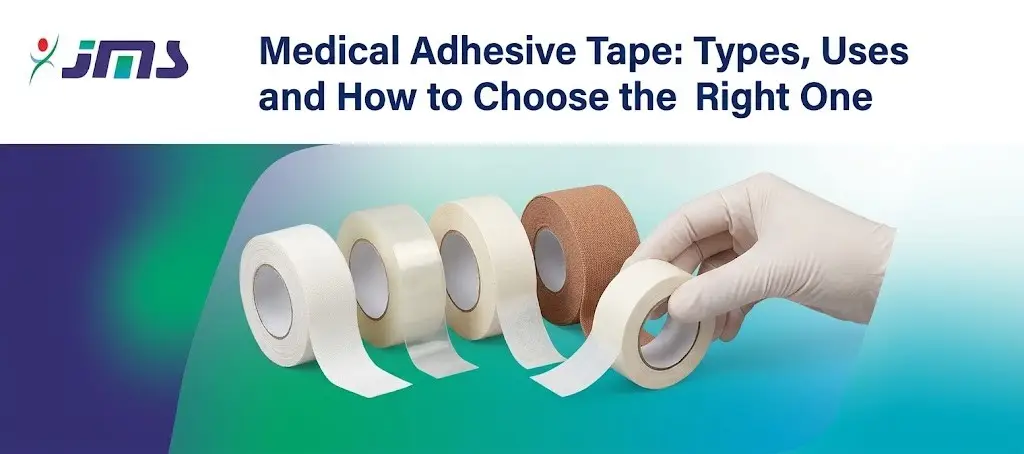
Medical Adhesive Tape: Types, Uses and How to Choose the Right One
Medical adhesive tape is a commonly used healthcare product found in hospitals, clinics, pharmacies, and home-care settings. It helps secure dressings, bandages, tubes, and other medical materials in place. Although medical adhesive tape may look simple, different types are designed for different purposes. Some tapes are suitable for securing dressings, while others are designed for delicate skin or longer wear. Therefore, choosing the right medical adhesive tape can help improve comfort, support proper wound care, and keep medical materials securely positioned. What Is Medical Adhesive Tape? Medical adhesive tape is a healthcare product designed to attach or secure medical materials to the skin or other suitable surfaces. It may be used with: • Gauze and wound dressings• Bandages• Medical tubing• Catheters and lines• Surgical dressings• Small medical devices Medical tapes are available in different materials, widths, adhesive strengths, and designs. As a result, healthcare professionals can select a suitable tape based on the patient’s needs and the intended application. Why Is Medical Adhesive Tape Important? Keeping a dressing or medical device securely in place is an important part of patient care. If a dressing moves or becomes loose, the affected area may not remain adequately covered. Suitable medical adhesive tape can help: • Secure wound dressings• Hold gauze in position• Support medical tubing• Reduce unnecessary movement of dressings• Maintain the position of certain medical devices• Support organized patient care Moreover, choosing an appropriate tape can help improve patient comfort, particularly when it needs to remain on the skin for a longer period. Common Types of Medical Adhesive Tape Medical adhesive tapes are available in several varieties. Each type has different characteristics and applications. Common types include: • Paper medical tape• Microporous tape• Transparent medical tape• Cloth medical tape• Waterproof medical tape• Hypoallergenic medical tape• Surgical adhesive tape However, the exact features and recommended uses can vary between products. Therefore, healthcare professionals should check the manufacturer’s instructions before selecting or using a particular tape. Paper Medical Tape Paper medical tape is lightweight and commonly used for general healthcare applications. It can be suitable for securing: • Gauze• Light dressings• Bandages• Tubing in selected situations Paper tape is often easy to tear and remove. In addition, some paper tapes are designed to allow a degree of air and moisture vapour exchange. Therefore, it can be a practical option when strong fixation is not required. Microporous Medical Tape Microporous medical tape is designed with a breathable structure that can allow air and moisture vapour to pass through the tape. It may be used to secure: • Dressings• Gauze• Tubing• Catheters• Other lightweight medical materials Because breathability can be useful for certain applications, microporous tape is often considered when prolonged skin contact is expected. Nevertheless, the tape should always be selected according to the patient’s skin condition and the intended medical application. Cloth Medical Tape Cloth medical tape is generally more durable and may provide stronger fixation than some lightweight tapes. It can be used for applications where a secure hold is required, such as: • Securing dressings• Supporting medical tubing• Holding certain medical devices in place However, stronger adhesion is not always better. For sensitive or fragile skin, a gentler tape may be more appropriate. Transparent Medical Tape Transparent medical tape allows the area underneath the tape to remain partially visible. This can be useful when healthcare professionals need to observe the condition of the surrounding area without immediately removing the tape. Depending on the product, transparent tapes may be used for: • Securing dressings• Fixing medical devices• Supporting catheter-related applications• Protecting selected areas The specific application should always follow the product’s intended use. Waterproof Medical Tape Water-resistant or waterproof medical tapes are designed to provide better resistance to moisture than standard tapes. They may be useful in situations where exposure to water or moisture is expected. However, waterproof does not mean that every medical tape can be submerged or used for every type of wound. Therefore, users should check the product specifications before use. Hypoallergenic Medical Tape Some people may have sensitive skin or may develop irritation from certain adhesives. Hypoallergenic medical tapes are designed to reduce the likelihood of skin irritation for suitable users. However, no adhesive can guarantee that a person will never experience a skin reaction. Therefore, healthcare professionals should consider the patient’s skin condition and previous sensitivity when selecting a medical tape. Surgical Adhesive Tape Surgical adhesive tapes are designed for specific healthcare and wound-care applications. They may be used to secure dressings or support certain wound-care procedures, depending on the product. Some surgical tapes are designed to provide strong yet flexible fixation. Others may focus more on breathability or gentle removal. As a result, the correct product should be selected according to the procedure, location, skin condition, and manufacturer’s recommendations. Uses of Medical Adhesive Tape Medical adhesive tape has many applications across healthcare settings. Common uses include: • Securing wound dressings• Holding gauze in place• Fixing bandages• Securing medical tubing• Supporting certain catheters and lines• Holding selected medical devices• Supporting routine wound-care procedures Furthermore, healthcare professionals may use different tapes depending on the patient’s condition and the specific procedure being performed. How to Choose the Right Medical Adhesive Tape Choosing medical tape should involve more than simply selecting the strongest adhesive. Several factors should be considered. Consider the Intended Use First, determine what the tape needs to secure. For example, lightweight paper tape may be suitable for certain dressings, while a stronger tape may be required for some medical devices. Therefore, always match the tape to its intended application. Consider the Patient’s Skin Skin condition is another important factor. Patients with sensitive, fragile, or easily irritated skin may require a gentler adhesive product. In contrast, a stronger adhesive may be appropriate for some applications where secure fixation is essential. Thus, patient comfort and skin condition should be considered alongside holding strength. Consider Adhesive Strength Medical tapes come with different levels of adhesion. A tape with insufficient adhesion may come loose too easily. On the other hand,
Medical Adhesive Tape: Types, Uses and How to Choose the Right One Read More »