
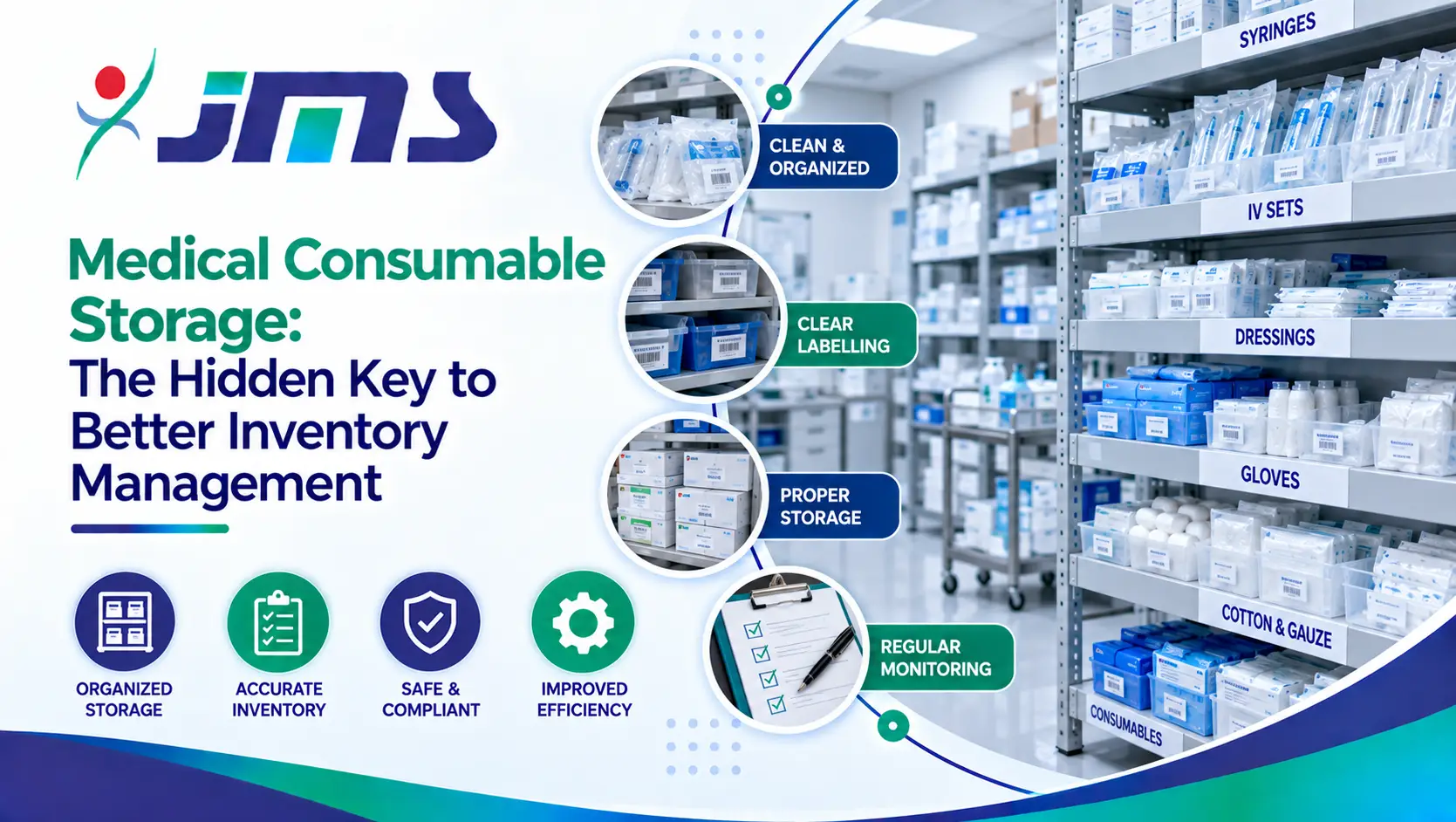
Medical Consumable Storage: The Hidden Key to Better Inventory Management
Medical consumables are an essential part of everyday healthcare operations. Hospitals, clinics, nursing homes, diagnostic centres, pharmacies, and other healthcare facilities depend on products such as gloves, cotton, gauze, dressings, medical tapes, orthopedic products, and other healthcare supplies. However, purchasing quality medical products is only one part of maintaining their usability. Proper storage is equally important. Poor storage conditions can expose products to moisture, dust, excessive heat, physical damage, contamination, or packaging deterioration. A well-planned storage system helps healthcare facilities protect their inventory, monitor expiry dates, maintain product organization, and ensure that supplies are available when needed. Why Proper Storage of Medical Consumables Matters Medical consumables are often used directly in patient care and clinical procedures. Their condition can therefore matter to healthcare professionals and patients. Proper storage can help healthcare facilities: Protect products from environmental damage Maintain packaging integrity Reduce unnecessary product wastage Improve inventory management Make expiry monitoring easier Reduce the risk of using damaged or expired products Improve stock rotation Support efficient procurement and supply management Storage requirements can vary from one product to another, so healthcare facilities should always follow the manufacturer’s instructions and applicable facility procedures. General Best Practices for Storing Medical Consumables Before looking at individual product categories, healthcare facilities can follow several basic storage principles. 1. Keep Storage Areas Clean Medical consumables should be stored in clean and well-maintained areas. Storage rooms and shelves should be regularly cleaned and kept free from unnecessary dust, dirt, waste, chemicals, and other potential contaminants. Products should generally not be placed directly on the floor. Shelving can help protect packaging and make inventory easier to inspect. 2. Control Moisture and Humidity Moisture can damage certain medical products and their packaging. Damp environments may contribute to packaging deterioration and may increase contamination concerns. Storage areas should therefore be kept dry and adequately ventilated. Healthcare facilities should also protect products from: Water leaks Condensation Damp walls Wet floors Excessive humidity Where a product has specific humidity requirements, the manufacturer’s instructions should be followed. 3. Follow Manufacturer Temperature Instructions There is no universal storage temperature for every medical consumable. Different products may have different storage requirements. Therefore, healthcare facilities should check the product label, packaging, instructions, or manufacturer’s documentation before deciding where and how a product should be stored. Products should be protected from excessive heat, freezing conditions, direct sunlight, or temperature fluctuations whenever the manufacturer specifies such precautions. 4. Protect Original Packaging Original packaging can help protect medical products from dust, moisture, light, contamination, and physical damage. Whenever appropriate, products should remain in their original packaging until they are required for use. Staff should regularly check packaging for: Tears Punctures Broken seals Water damage Crushing Fading or unreadable labels Products with compromised packaging should be handled according to the healthcare facility’s established quality and safety procedures. Storage Best Practices for Different Medical Product Categories Different medical consumables have different characteristics. Storage practices should therefore be considered according to the product category. 1. Medical Gloves Medical gloves are widely used in hospitals, clinics, laboratories, diagnostic centres, and other healthcare environments. They should be protected from environmental conditions that could affect the packaging or material. Storage Best Practice for Medical Gloves Store gloves in a clean and dry area. Keep them away from direct sunlight. Protect them from excessive heat. Avoid unnecessary exposure to moisture. Keep the original packaging intact until use. Do not place glove boxes directly on the floor. Avoid storing them near chemicals or other materials that could damage the packaging. Check expiry dates regularly. Gloves should be stored according to the manufacturer’s recommended conditions and product labeling. 2. Cotton Products Medical cotton products may be used for cleaning, wound care, dressing, and other healthcare applications. Examples can include absorbent cotton, cotton rolls, cotton balls, zig-zag cotton, and other specialized cotton products. Storage Best Practice for Cotton Products Store cotton products in a clean, dry environment. Protect them from moisture and water. Keep packaging intact. Avoid exposure to dust and other contaminants. Keep products away from chemicals and strong odors. Store products on clean shelves rather than directly on the floor. Monitor expiry or shelf-life information where applicable. Moisture control is particularly important because damp conditions can compromise packaging and product condition. 3. Gauze and Wound-Care Products Gauze, dressings, and other wound-care materials are commonly used for wound management, cleaning, dressing, and clinical procedures. For products supplied as sterile, maintaining package integrity is particularly important. Storage Best Practice for Gauze and Dressings Store products in a clean and dry area. Protect sterile packaging from moisture and physical damage. Avoid crushing, tearing, or puncturing packages. Keep sterile products in their original packaging. Do not use products if sterile packaging is visibly compromised. Organize products by type and size for easy identification. Check expiry dates and batch/lot information regularly. Sterile products should be handled according to the manufacturer’s instructions and the healthcare facility’s infection-control procedures. 4. Medical Tapes Medical tapes may be used for dressing fixation, IV-site support, cannula fixation, and other healthcare applications. Their adhesive properties and packaging can be affected by unsuitable environmental conditions. Storage Best Practice for Medical Tapes Store tapes in a clean and dry area. Follow the manufacturer’s specified temperature conditions. Protect products from excessive heat. Avoid unnecessary exposure to moisture. Keep packaging closed or intact until use. Protect rolls from dust and physical damage. Rotate stock according to expiry or shelf-life information. Always check the manufacturer’s instructions for product-specific storage conditions. 5. Orthopedic Products Orthopedic supplies can include products used for support, immobilization, dressing, casting, and related clinical applications. Different orthopedic products may have different storage requirements. Storage Best Practice for Orthopedic Products Keep products in clean, dry storage areas. Organize products by type and size. Avoid excessive pressure or stacking that could damage packaging. Protect products from moisture. Keep them away from direct sunlight and excessive heat where applicable. Maintain clear product identification. Check packaging condition before use. Monitor expiry or shelf-life information where applicable. Products such as casting and dressing materials
Medical Consumable Storage: The Hidden Key to Better Inventory Management Read More »