
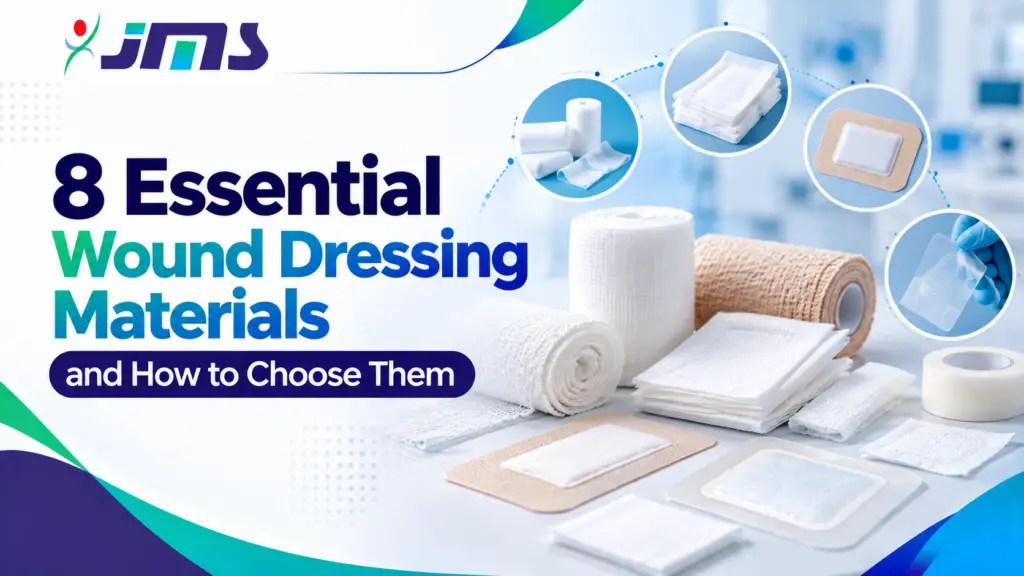
Medical dressing materials play an important role in wound care, surgical procedures, and everyday clinical practice. Hospitals, clinics, nursing homes, and other healthcare facilities rely on suitable dressing products to protect wounds, absorb fluids, maintain cleanliness, and support appropriate wound management.
Choosing the right medical dressing materials requires careful consideration of wound characteristics, product specifications, absorbency, sterility, patient needs, and clinical protocols. Different dressing materials serve different purposes, making it important for healthcare professionals and procurement teams to understand their available options.
In this guide, we explore eight common types of medical dressing materials and the factors healthcare facilities should consider when selecting them.
What Are Medical Dressing Materials?
Medical dressing materials are products used to cover, protect, or manage wounds and surgical sites. Depending on their design, they may absorb wound exudate, help protect the affected area from external contamination, or maintain a suitable environment for wound management.
Common examples include gauze swabs, absorbent cotton, non-adherent dressings, foam dressings, and transparent film dressings.
The appropriate product depends on the wound, the intended application, the manufacturer’s instructions, and the healthcare professional’s assessment.
1. Gauze Swabs
Gauze swabs are widely used in hospitals, clinics, and first-aid settings. They are commonly made from woven or non-woven materials and are available in different sizes, ply counts, and packaging formats.
Gauze swabs may be used for wound cleaning, absorbing fluids, and covering certain wounds, depending on their specifications and whether they are sterile or non-sterile.
Key features:
Available in multiple sizes and ply options
Suitable for various wound-care applications
Offered in sterile and non-sterile formats
Easy to store and manage when properly packaged
Healthcare facilities should select gauze swabs according to their intended use and verify packaging integrity and sterility requirements before use.
2. Absorbent Cotton
Absorbent cotton is a soft, moisture-absorbing material used in various healthcare and clinical applications. It may be supplied in rolls, balls, or other formats.
Depending on the product specifications and clinical protocol, absorbent cotton can be used for cleaning, padding, and selected wound-care procedures. It should not automatically be treated as a substitute for a purpose-designed wound dressing.
Key features:
Soft and absorbent material
Available in different packaging sizes
Useful for selected clinical and care applications
Requires suitable storage to protect product quality
Procurement teams should verify the intended use, material specifications, and applicable quality documentation when purchasing absorbent cotton.
3. Non-Adherent Dressings
Non-adherent dressings are designed to reduce sticking to the wound surface, helping make dressing changes more comfortable when used appropriately.
These products may be useful for selected superficial wounds, minor burns, and other situations where minimising adherence is desirable. Some non-adherent dressings require a secondary dressing to absorb fluid and hold the product in place.
Key features:
Designed to minimise adherence to the wound
Available in different sizes and constructions
May support more comfortable dressing changes
Can be combined with suitable secondary dressings
Healthcare professionals should consider the wound’s condition, exudate level, and dressing-change requirements when choosing these products.
4. Absorbent Wound Dressings
Absorbent wound dressings are designed to manage fluid from wounds. They are available in different constructions and absorbency levels to meet different clinical requirements.
Selecting an appropriate dressing helps healthcare teams manage wound exudate and reduce leakage through the dressing when used according to its intended purpose.
Key features:
Available in different absorbency levels
Designed for selected wounds with fluid discharge
Offered in different shapes and sizes
May require a secondary dressing or fixation method
The dressing should be selected based on the amount of exudate, surrounding skin condition, wound location, and clinical assessment.
5. Adhesive Dressings
Adhesive dressings combine a wound-contact pad with an adhesive border or backing. Many are designed for minor cuts, abrasions, and selected post-procedure applications.
They can provide convenient coverage and help keep the dressing in place without separate fixation in suitable situations.
Key features:
Convenient application
Available in different shapes and sizes
Designed for selected minor wounds
Different adhesive options may suit different skin needs
Healthcare facilities should consider adhesive sensitivity, wound size, skin condition, and the product’s intended application when selecting adhesive dressings.
6. Transparent Film Dressings
Transparent film dressings are thin, flexible coverings that allow visual inspection of the covered area without removing the dressing. Some products provide a protective barrier against external contaminants while allowing water vapour to pass through.
They are commonly used for selected superficial wounds, securement applications, and situations where visual monitoring is useful.
Key features:
Transparent material for visual inspection
Flexible and conformable design
Available in different dimensions
May provide a barrier against external contamination when correctly applied
These dressings are not suitable for every wound, particularly where fluid absorption requirements exceed their capabilities. Product instructions and clinical protocols should guide selection.
7. Foam Dressings
Foam dressings are designed to absorb wound exudate and provide cushioning. Depending on the product, they may include adhesive borders or additional layers for specific wound-care needs.
They are often considered for selected wounds with moderate or higher levels of exudate, subject to professional assessment and product guidance.
Key features:
Available in different thicknesses and sizes
Designed to absorb wound fluid
May provide cushioning for the covered area
Offered in adhesive and non-adhesive versions
Healthcare professionals should assess exudate levels, wound depth, surrounding skin, and dressing-change frequency before choosing a foam dressing.
8. Hydrocolloid Dressings
Hydrocolloid dressings contain materials that interact with wound fluid to form a gel-like substance. They can support a moist wound environment for selected wounds.
These dressings may be appropriate for certain superficial wounds with limited to moderate exudate, depending on the product and clinical assessment.
Key features:
Designed to maintain a moist wound environment
Available in different shapes and thicknesses
Can provide protective coverage
May remain in place for a product-specific period
Hydrocolloid dressings are not appropriate for every wound. Infection concerns, wound characteristics, and manufacturer guidance must be considered before use.
How Healthcare Facilities Choose the Right Medical Dressing Materials
Selecting medical dressing materials involves balancing clinical requirements, product quality, supply availability, and cost. Healthcare facilities should establish clear selection criteria to support consistent purchasing decisions.
1. Consider the Intended Clinical Application
Different products are designed for different purposes. Procurement teams should confirm whether a dressing is intended for wound coverage, fluid absorption, protection, cushioning, or another specific application.
2. Evaluate Absorbency Requirements
Wounds vary in the amount of fluid they produce. Selecting a product with appropriate absorbency helps reduce leakage and unnecessary dressing changes. Clinical professionals should determine the appropriate option based on the wound assessment.
3. Verify Sterility and Packaging
Sterile products should be supplied in intact packaging with appropriate labelling and supporting information. Facilities should follow their procedures for inspecting deliveries and handling products with damaged or compromised packaging.
4. Review Product Specifications and Documentation
Check dimensions, material composition, construction, intended use, storage instructions, and relevant regulatory documentation. Product specifications should match the facility’s requirements.
5. Assess Supplier Reliability
A reliable supplier should provide clear product information, consistent order fulfilment, appropriate documentation, and communication about stock availability and delivery timelines.
6. Balance Cost With Product Suitability
The lowest-priced option may not be the most suitable choice. Facilities should compare equivalent specifications, pack sizes, quality requirements, and expected usage rather than price alone.
7. Plan Inventory and Storage
Track consumption, reorder levels, expiry dates where applicable, and storage conditions. Avoid purchasing quantities that may remain unused beyond their shelf life.
Common Mistakes to Avoid When Purchasing Medical Dressing Materials
Healthcare facilities can improve procurement practices by avoiding these common mistakes:
Choosing products based only on price
Overlooking the difference between sterile and non-sterile products
Buying unsuitable dressing sizes or absorbency levels
Ignoring product-specific instructions and documentation
Accepting damaged or poorly labelled packaging without assessment
Overstocking products with limited shelf life
Failing to review supplier delivery performance
A standardised purchasing process helps healthcare teams maintain suitable supplies while reducing avoidable waste.
Conclusion
Medical dressing materials are essential components of wound care and routine healthcare operations. From gauze swabs and absorbent cotton to foam, film, and hydrocolloid dressings, each product has specific characteristics and intended applications.
Healthcare facilities should choose products based on clinical assessment, absorbency requirements, product specifications, sterility, packaging integrity, documentation, and supplier reliability. A structured procurement process can help hospitals and clinics maintain appropriate stock and make informed purchasing decisions.
By understanding the available types of medical dressing materials, healthcare procurement teams can better evaluate products and support the needs of their clinical departments.
About JMS Medicon Private Limited
JMS Medicon Private Limited supports healthcare supply requirements through its medical and healthcare product offerings. Hospitals, clinics, and healthcare organisations can contact the company to enquire about product availability, specifications, and purchasing requirements.
Contact Details
Email: jmsmedicon@gmail.com
Phone: +91 9437040988
Office Address:
Plot No-85, Padmalava Nagar, Trisulia, Cuttack, Odisha – 754005
Registered Address:
H-1370 DSIDC Industrial Complex, Narela, Delhi – 110040
Website: https://jmsmedicon.com/
