
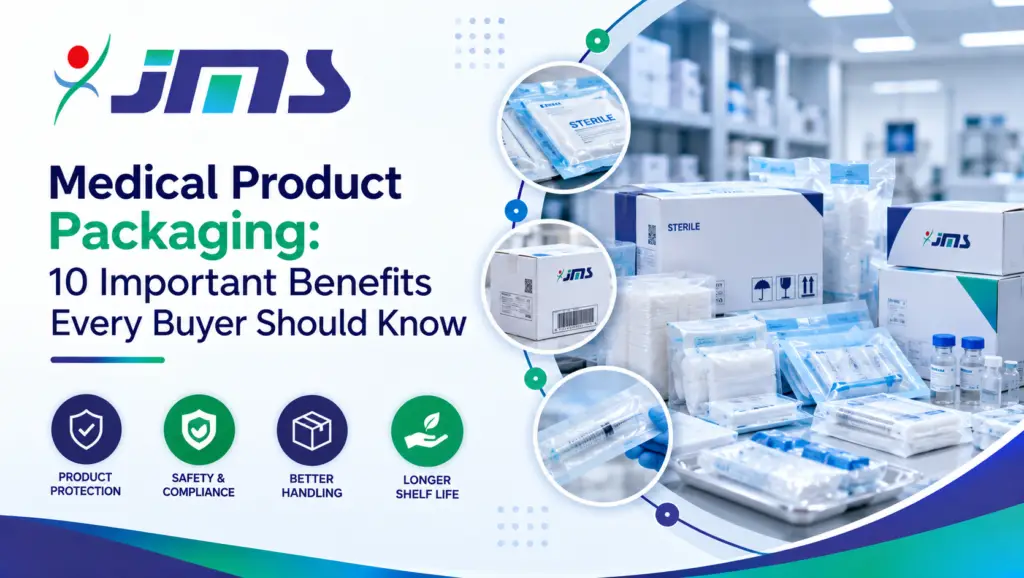
Packaging plays an important role in the healthcare product supply chain. For medical consumables and healthcare products, packaging is not simply an outer covering. It can help with product identification, handling, storage, hygiene, traceability, and protection throughout transportation and use.
Products such as medical gloves, cotton, gauze, dressings, tapes, orthopedic products, and medical devices may pass through several stages before reaching a healthcare professional. Appropriate packaging can help protect products during these stages and provide important information to healthcare buyers and users.
However, packaging requirements vary depending on the product. Healthcare organizations should always follow the manufacturer’s labeling, instructions, and applicable requirements.
What Is the Role of Packaging in Healthcare Products?
Medical product packaging can serve several functions at the same time.
It may help:
- Identify the product
- Protect the contents
- Provide product information
- Support safe handling
- Facilitate storage
- Protect against environmental exposure
- Maintain package integrity
- Support batch and lot identification
- Communicate expiry or shelf-life information
- Provide relevant usage or storage instructions
The exact role depends on the product, its intended use, and the type of packaging used.
1. Packaging Helps Identify the Product
Healthcare facilities may store hundreds or thousands of different medical products.
Clear packaging helps staff distinguish between products that may look similar.
Important information may include:
- Product name
- Product type
- Size
- Dimensions
- Quantity
- Material
- Product code
- Intended use
- Manufacturer information
For example, different sizes of medical gloves may have similar packaging. Clear product identification can help staff select the correct size.
Similarly, gauze products may differ in dimensions, layers, construction, or packaging format. Clear labeling helps healthcare buyers and staff distinguish between them.
2. Packaging Supports Product Handling
Medical supplies can be transported and handled several times before they are used.
Packaging can help make products easier to:
- Transport
- Carry
- Stack
- Store
- Count
- Distribute
- Identify
Appropriate packaging can also help protect products from unnecessary physical handling.
For larger healthcare facilities, products may move from:
Manufacturer → Distributor → Central Medical Store → Department → Point of Use
At each stage, packaging can help maintain product organization and identification.
3. Packaging Supports Storage
Storage conditions can affect medical products, particularly when products are exposed to unsuitable environmental conditions.
Packaging can provide a layer of protection against factors such as:
- Dust
- Moisture
- Light, where applicable
- Physical damage
- Contamination risks
However, packaging should not be considered a substitute for proper storage conditions.
Healthcare facilities should still follow the manufacturer’s specified storage requirements.
Good Storage Practice
Products should generally be:
- Stored in clean areas
- Protected from moisture
- Kept away from unnecessary contamination
- Protected from excessive heat where applicable
- Stored according to manufacturer instructions
- Kept in suitable original packaging where appropriate
4. Packaging Can Support Hygiene
Hygiene is an important consideration for healthcare products.
Packaging can help limit unnecessary exposure of products to the surrounding environment during transportation and storage.
This can be particularly relevant for products that require controlled handling or specific packaging conditions.
For products supplied as sterile, the packaging system is particularly important because package integrity is part of maintaining the product’s sterile state until use.
Before Using a Packaged Medical Product
Healthcare staff should check for:
- Tears
- Punctures
- Broken seals
- Open packaging
- Moisture damage
- Unusual contamination
- Missing or unclear labeling
If packaging integrity is compromised, the product should be handled according to the healthcare facility’s established procedures.
5. Packaging Helps Protect Products During Transportation
Medical products may travel long distances before reaching their final destination.
During transportation, packages can potentially experience:
- Vibration
- Compression
- Impact
- Dust exposure
- Moisture exposure
- Temperature fluctuations
Appropriate packaging can help reduce the risk of physical damage during handling and transportation.
Outer cartons can also make it easier to organize products during bulk shipment.
6. Packaging Supports Product Traceability
Traceability is important for healthcare products.
Packaging may display information such as:
- Batch number
- Lot number
- Manufacturing information
- Product code
- Expiry date
- Manufacturer details
This information can help healthcare organizations identify specific products within their inventory.
Batch and lot information can also support inventory management and quality investigations where required.
7. Packaging Provides Expiry Information
Many healthcare products have a defined shelf life or expiry date.
Clear expiry information can help healthcare facilities manage inventory effectively.
Staff can use expiry information to:
- Identify products approaching expiry
- Apply FEFO principles
- Reduce unnecessary wastage
- Prevent use of expired products
- Plan inventory rotation
FEFO
FEFO means First Expiry, First Out.
Under this approach, products with the earliest expiry dates are generally prioritized for use or issue before products with later expiry dates, provided they remain suitable for use.
8. Packaging Communicates Storage Requirements
Some healthcare products have specific storage requirements.
The product packaging or accompanying documentation may communicate information relating to:
- Temperature
- Moisture
- Light exposure
- Handling
- Storage orientation
- Other product-specific requirements
Healthcare facilities should review these instructions before storing products.
Important
There is no single storage condition that applies to every medical product.
A product should be stored according to its manufacturer’s instructions and applicable requirements.
9. Packaging Helps Prevent Product Mix-Ups
Healthcare facilities often manage products with similar names or appearances.
For example:
- Different glove sizes
- Different gauze dimensions
- Sterile vs non-sterile products
- Different cotton formats
- Different tape sizes
- Different orthopedic products
Clear packaging and labeling can reduce confusion during storage and distribution.
Color coding or other visual identification may also be used by manufacturers, but staff should always confirm the actual product information rather than relying only on appearance.
10. Packaging Supports Inventory Management
Good packaging can make inventory management easier by providing visible product information.
Warehouse or medical-store staff can identify:
- Product
- Quantity
- Batch/lot
- Expiry
- Size
- Specification
This makes stock counting and inventory recording more efficient.
For large healthcare facilities, packaging information can also be captured in digital inventory systems.
Packaging Requirements for Different Medical Products
Different medical products may require different packaging approaches.
Medical Gloves
Packaging can help identify:
- Glove type
- Size
- Quantity
- Manufacturer
- Batch/lot
- Expiry information where applicable
The packaging should protect gloves from unnecessary environmental exposure and physical damage.
Cotton Products
Packaging can help protect cotton products from:
- Dust
- Moisture
- Physical damage
- Unnecessary handling
It can also communicate product type, quantity, size, manufacturer information, and other relevant details.
Cotton products should be stored according to their product-specific instructions.
Gauze and Dressings
Packaging can help protect gauze from environmental exposure and physical damage.
For products supplied as sterile, package integrity is particularly important.
Healthcare staff should check the package before use and avoid using products where packaging integrity is compromised.
Medical Tapes
Packaging can protect tapes from unnecessary exposure to environmental conditions that could affect the product or its adhesive properties.
Labels can also identify tape type, size, quantity, batch information, and storage requirements where applicable.
Orthopedic Products
Packaging can help protect orthopedic products from physical damage, dust, moisture, and unnecessary handling.
Product labels can help staff identify the appropriate type and size.
Nebulizer, BP and O2 Products
Packaging can provide protection during transportation and storage and can help keep accessories and components organized.
Product information can also communicate handling, storage, and usage instructions where applicable.
Surgical and Medical Devices
Medical devices may have more detailed packaging and labeling requirements depending on their design and intended use.
Packaging may communicate:
- Device name
- Model or product number
- Size
- Batch/lot information
- Expiry information where applicable
- Manufacturer details
- Storage instructions
- Handling instructions
- Other applicable information
Healthcare facilities should carefully review product labeling and accompanying documentation.
Primary Packaging vs Secondary Packaging
Medical products may use different levels of packaging.
Primary Packaging
Primary packaging is the packaging that directly contains or surrounds the product.
Its role can include:
- Protecting the product
- Maintaining product condition
- Supporting hygiene
- Providing identification
Secondary Packaging
Secondary packaging groups one or more primary packages together.
It can help with:
- Transportation
- Bulk handling
- Storage
- Inventory organization
Tertiary Packaging
Tertiary packaging is commonly associated with larger-scale transportation and distribution.
Examples can include:
- Shipping cartons
- Palletized loads
- Transport containers
The exact packaging structure varies according to the product and manufacturer.
What Healthcare Buyers Should Check on Packaging
Before accepting or purchasing medical products, healthcare buyers can review several packaging-related factors.
Product Identification
Is the product name and specification clearly stated?
Quantity
Is the number of units or quantity clearly indicated?
Batch or Lot
Is relevant batch or lot information available?
Expiry
Is the expiry date or shelf-life information clearly provided where applicable?
Packaging Integrity
Is the package intact and free from visible damage?
Storage Instructions
Are relevant storage conditions communicated?
Manufacturer Information
Is the manufacturer or responsible organization clearly identified?
Product-Specific Information
Are relevant instructions, warnings, or handling requirements provided?
What to Do When Packaging Is Damaged
Damaged packaging should not automatically be ignored.
Healthcare staff should assess the situation according to the product type and facility procedures.
Potential concerns include:
- Torn packaging
- Broken seals
- Punctures
- Moisture exposure
- Crushed cartons
- Missing labels
- Signs of contamination
Products with compromised packaging should be segregated or managed according to the healthcare facility’s quality and safety procedures.
For products where package integrity is essential, additional precautions may be necessary.
Packaging and Sustainability
Healthcare packaging also creates environmental considerations.
Manufacturers and healthcare facilities can consider ways to reduce unnecessary packaging while maintaining the required level of product protection.
Potential considerations include:
- Efficient package sizing
- Appropriate material selection
- Reducing unnecessary secondary packaging
- Responsible disposal
- Recycling where appropriate
- Balancing material reduction with product protection
However, packaging reduction should never compromise product integrity or applicable safety and quality requirements.
Why Packaging Matters to Healthcare Buyers
For procurement teams, packaging should be considered as part of the overall product evaluation.
A suitable package can support:
Identification → Handling → Transportation → Storage → Protection → Inventory Management → End Use
This means packaging can influence both product protection and operational efficiency.
When comparing suppliers, healthcare buyers can therefore evaluate not only the product itself but also the quality, clarity, suitability, and integrity of its packaging.
JMS Medicon and Healthcare Product Packaging
JMS Medicon provides a range of healthcare and medical products, including medical gloves, cotton products, gauze products, tapes and orthopedic products, nebulizer/BP/O2 products, and surgical and medical devices.
For these product categories, appropriate packaging can help support identification, handling, storage, and protection throughout the supply chain.
Healthcare buyers should review the packaging and product information supplied with each product and follow the manufacturer’s instructions for storage, handling, and use.
Medical Product Packaging Checklist
Before receiving or storing healthcare products, facilities can use this simple checklist:
✓ Product name clearly identified
✓ Correct size/specification
✓ Quantity clearly stated
✓ Batch/lot information available where applicable
✓ Expiry/shelf-life information checked
✓ Packaging intact
✓ No visible moisture damage
✓ No tears or punctures
✓ Labels readable
✓ Storage instructions available
✓ Manufacturer information available
✓ Product-specific handling instructions reviewed
Conclusion
Packaging is an important part of the healthcare product supply chain. It can help with product identification, handling, storage, hygiene, traceability, expiry monitoring, and physical protection.
For products such as gloves, cotton, gauze, medical tapes, orthopedic supplies, and medical devices, packaging requirements can vary according to the product’s characteristics and intended use.
Healthcare buyers should therefore look beyond the appearance of the package and consider whether it provides appropriate product information, protects the contents, supports proper storage, and maintains its integrity throughout the supply chain.
Ultimately, effective packaging works together with quality manufacturing, appropriate storage, careful handling, and reliable inventory management to help healthcare facilities maintain products in suitable condition until they are needed.
Looking for Reliable Healthcare Products?
JMS Medicon Private Limited
Email: jmsmedicon@gmail.com
Phone: +91 9437040988
Office Address:
Plot No-85, Padmalava Nagar, Trisulia, Cuttack, Odisha – 754005
Registered Address:
H-1370 DSIDC Industrial Complex, Narela, Delhi – 110040
Website: www.jmsmedicon.com
