
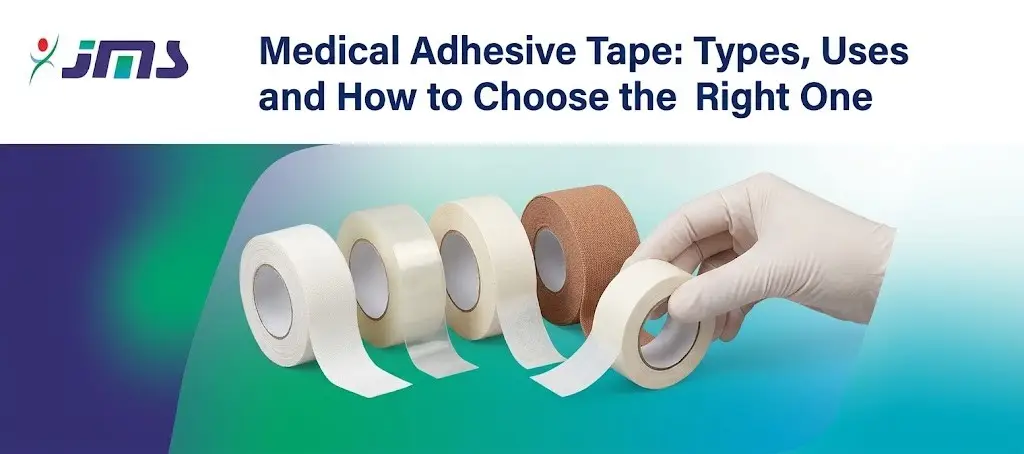
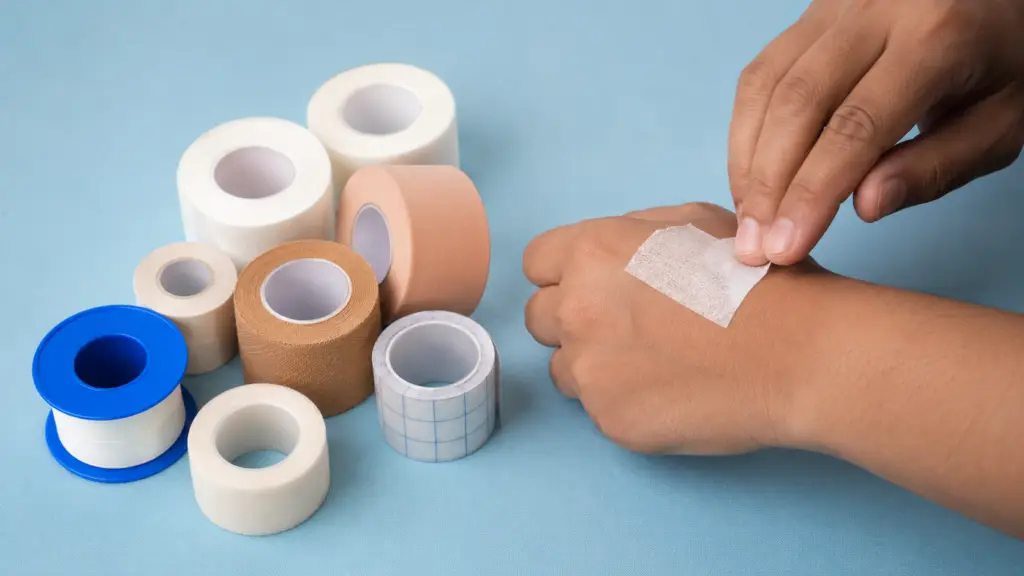
Microporous Medical Tape
Microporous medical tape is designed with a breathable structure that can allow air and moisture vapour to pass through the tape.
It may be used to secure:
• Dressings
• Gauze
• Tubing
• Catheters
• Other lightweight medical materials
Because breathability can be useful for certain applications, microporous tape is often considered when prolonged skin contact is expected.
Nevertheless, the tape should always be selected according to the patient’s skin condition and the intended medical application.
Cloth Medical Tape
Cloth medical tape is generally more durable and may provide stronger fixation than some lightweight tapes.
It can be used for applications where a secure hold is required, such as:
• Securing dressings
• Supporting medical tubing
• Holding certain medical devices in place
However, stronger adhesion is not always better. For sensitive or fragile skin, a gentler tape may be more appropriate.
Transparent Medical Tape
Transparent medical tape allows the area underneath the tape to remain partially visible.
This can be useful when healthcare professionals need to observe the condition of the surrounding area without immediately removing the tape.
Depending on the product, transparent tapes may be used for:
• Securing dressings
• Fixing medical devices
• Supporting catheter-related applications
• Protecting selected areas
The specific application should always follow the product’s intended use.
Waterproof Medical Tape
Water-resistant or waterproof medical tapes are designed to provide better resistance to moisture than standard tapes.
They may be useful in situations where exposure to water or moisture is expected.
However, waterproof does not mean that every medical tape can be submerged or used for every type of wound. Therefore, users should check the product specifications before use.
Hypoallergenic Medical Tape
Some people may have sensitive skin or may develop irritation from certain adhesives.
Hypoallergenic medical tapes are designed to reduce the likelihood of skin irritation for suitable users. However, no adhesive can guarantee that a person will never experience a skin reaction.
Therefore, healthcare professionals should consider the patient’s skin condition and previous sensitivity when selecting a medical tape.
Surgical Adhesive Tape
Surgical adhesive tapes are designed for specific healthcare and wound-care applications.
They may be used to secure dressings or support certain wound-care procedures, depending on the product.
Some surgical tapes are designed to provide strong yet flexible fixation. Others may focus more on breathability or gentle removal.
As a result, the correct product should be selected according to the procedure, location, skin condition, and manufacturer’s recommendations.
Uses of Medical Adhesive Tape
Medical adhesive tape has many applications across healthcare settings.
Common uses include:
• Securing wound dressings
• Holding gauze in place
• Fixing bandages
• Securing medical tubing
• Supporting certain catheters and lines
• Holding selected medical devices
• Supporting routine wound-care procedures
Furthermore, healthcare professionals may use different tapes depending on the patient’s condition and the specific procedure being performed.
How to Choose the Right Medical Adhesive Tape
Choosing medical tape should involve more than simply selecting the strongest adhesive.
Several factors should be considered.
Consider the Intended Use
First, determine what the tape needs to secure.
For example, lightweight paper tape may be suitable for certain dressings, while a stronger tape may be required for some medical devices.
Therefore, always match the tape to its intended application.
Consider the Patient’s Skin
Skin condition is another important factor.
Patients with sensitive, fragile, or easily irritated skin may require a gentler adhesive product.
In contrast, a stronger adhesive may be appropriate for some applications where secure fixation is essential.
Thus, patient comfort and skin condition should be considered alongside holding strength.
Consider Adhesive Strength
Medical tapes come with different levels of adhesion.
A tape with insufficient adhesion may come loose too easily. On the other hand, excessively strong adhesion may make removal uncomfortable or potentially damage delicate skin.
Therefore, the goal is to select a tape that provides adequate fixation without unnecessary adhesion.
Consider Breathability
Some medical tapes are designed to allow air and moisture vapour to pass through the material.
Breathable tape may be preferable for certain applications where prolonged skin contact is expected.
However, the need for breathability depends on the specific use and product design.
Consider Moisture Exposure
If the tape will be exposed to moisture, a water-resistant product may be more suitable.
For example, certain applications may benefit from a tape that maintains adhesion when exposed to small amounts of moisture.
Nevertheless, the product’s specifications should always be checked before use.
Consider Ease of Removal
Medical tape may need to be removed and replaced regularly.
Therefore, ease of removal is particularly important when the tape is being used on sensitive skin or for repeated dressing changes.
A suitable tape should provide secure fixation while allowing removal according to the manufacturer’s instructions.
Medical Adhesive Tape for Hospitals and Clinics
Hospitals and clinics use medical adhesive tapes for many routine procedures.
Healthcare facilities may need different types and sizes depending on their departments and patient requirements.
For example, emergency departments, surgical units, wound-care areas, and general wards may have different tape requirements.
Therefore, maintaining a suitable selection of medical tapes can help healthcare professionals respond to different patient-care needs.
Common Mistakes to Avoid When Using Medical Tape
Using the right tape is important, but correct application also matters.
Healthcare staff and caregivers should avoid:
• Using a tape for an application not recommended by the manufacturer
• Applying tape to damaged skin without appropriate guidance
• Pulling tape aggressively during removal
• Using damaged or contaminated tape
• Storing tape in unsuitable conditions
• Ignoring signs of skin irritation
• Choosing tape only based on adhesive strength
Additionally, medical tape should be applied to clean and appropriately prepared skin when required for the intended use.
How to Store Medical Adhesive Tape
Proper storage can help maintain the quality of medical adhesive tape.
Healthcare facilities should:
• Store tape in a clean and dry location.
• Protect rolls from excessive moisture.
• Keep products in their original packaging when appropriate.
• Check packaging for damage.
• Follow the manufacturer’s recommended storage conditions.
• Check expiry dates where applicable.
As a result, proper storage can help preserve the tape’s adhesive properties and overall quality.
Choosing Quality Medical Adhesive Tape
Quality is an important consideration when purchasing medical adhesive tape for hospitals, clinics, and healthcare facilities.
Before selecting a product, consider:
• Intended medical application
• Adhesive performance
• Skin compatibility
• Material quality
• Product dimensions
• Packaging
• Manufacturer reliability
• Storage requirements
• Availability of different sizes
Moreover, healthcare facilities should purchase medical supplies from reliable manufacturers and suppliers to support consistent patient care.
Trusted Medical and Healthcare Products by JMS Medicon
Looking for reliable medical, surgical, and healthcare products?
 JMS Medicon Private Limited
Plot No-85, Padmalava Nagar, Trisulia,
Cuttack, Odisha – 754005
 Phone: +91 9437040988
 Email: jmsmedicon@gmail.com
 Website: www.jmsmedicon.com
JMS Medicon supports hospitals, clinics, pharmacies, and healthcare facilities with quality medical and surgical products for everyday patient care.
Choosing the Right Medical Tape for Safer Patient Care
Medical adhesive tape is a small but important part of everyday healthcare. From securing gauze and wound dressings to supporting selected medical devices, the right tape can help maintain proper positioning and improve patient comfort.
The best choice depends on the intended use, required adhesion, skin sensitivity, breathability, moisture exposure, and ease of removal.
Therefore, healthcare facilities should select medical adhesive tapes carefully and always follow the manufacturer’s instructions for proper application, storage, and use.
