
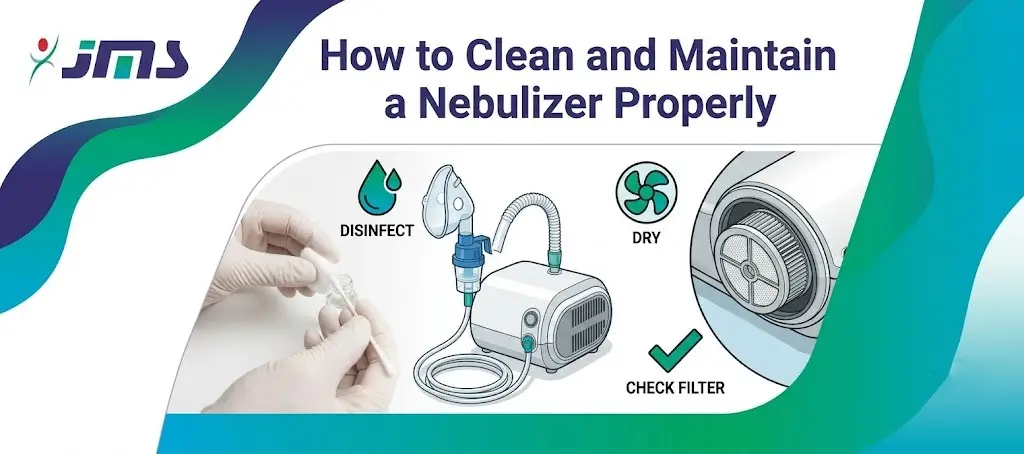
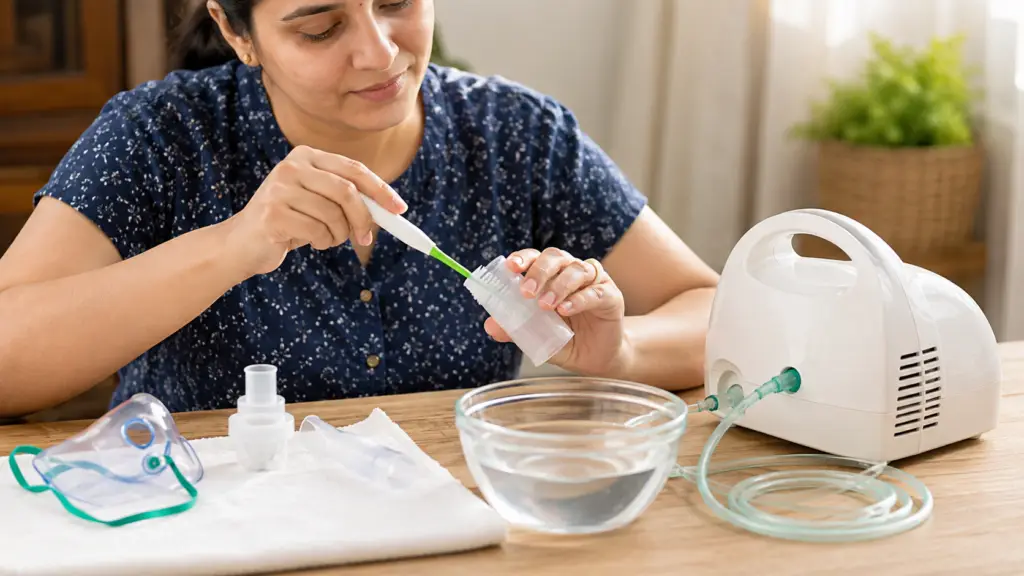
How to Maintain the Nebulizer Compressor
The compressor is the main electrical unit of many nebulizers. Unlike removable components, it should not be washed or submerged in water.
Instead, users should:
• Keep the compressor on a clean and dry surface.
• Wipe the exterior according to the manufacturer’s instructions.
• Keep the air vents free from dust and obstruction.
• Check the power cord and plug for visible damage.
• Follow the recommended maintenance instructions.
If the compressor develops unusual sounds, overheating, or other problems, it should be inspected according to the manufacturer’s guidance.
When Should Nebulizer Parts Be Replaced?
Nebulizer components do not necessarily last forever. Some parts may need regular replacement depending on the device, frequency of use, and manufacturer’s recommendations.
Replacement may be necessary if a component is:
• Cracked or damaged
• Discoloured or visibly contaminated
• Difficult to clean
• Showing signs of wear
• Not functioning properly
• Past the manufacturer’s recommended replacement period
Therefore, users should check the product manual and replace components when required.
Common Nebulizer Cleaning Mistakes to Avoid
Even when users clean their nebulizers regularly, certain mistakes can affect equipment hygiene.
Avoid:
• Leaving medication inside the medicine cup
• Storing components while they are still wet
• Using unsuitable household cleaning chemicals
• Washing electrical components
• Ignoring damaged or cracked parts
• Using expired or contaminated supplies
• Sharing equipment without appropriate cleaning and disinfection
Additionally, users should avoid modifying the nebulizer or its components without professional or manufacturer guidance.
How to Store a Nebulizer Properly
Proper storage helps protect the nebulizer between treatments.
After the equipment has been cleaned and completely dried, store it in a clean and dry location.
Good storage practices include:
• Keep the device away from dust and moisture.
• Store removable components in a clean place.
• Protect the equipment from children and pets.
• Keep the manufacturer’s instructions available.
• Avoid storing the nebulizer near excessive heat.
Furthermore, inspect the equipment before each use to make sure the components appear clean and undamaged.
How to Maintain Nebulizer Hygiene in Healthcare Facilities
Nebulizers may also be used in hospitals, clinics, and other healthcare settings. In these environments, infection prevention requires additional attention.
Healthcare facilities should follow appropriate infection prevention procedures and the manufacturer’s instructions for cleaning, disinfection, and replacement.
Depending on the equipment and clinical setting, healthcare professionals may need to use appropriate sterile or single-patient components.
Moreover, nebulizer equipment should be handled by trained staff and maintained according to established healthcare protocols.
Tips for Safer Nebulizer Use
A few simple habits can make routine nebulizer care easier.
Remember to:
• Clean reusable components after use as instructed.
• Allow components to dry completely.
• Never immerse electrical parts in water.
• Follow the manufacturer’s cleaning instructions.
• Replace worn or damaged components.
• Keep the nebulizer in a clean, dry location.
• Use medication only as prescribed.
• Seek professional advice if the device is not working correctly.
As a result, consistent care can help keep the nebulizer hygienic and ready for use.
When Should You Seek Professional Advice?
If a nebulizer stops working properly, produces an unusual sound, becomes damaged, or does not appear to deliver medication correctly, it should not simply be ignored.
Similarly, if a patient experiences worsening breathing difficulty or other concerning symptoms during treatment, medical advice should be sought promptly.
A healthcare professional can also provide guidance about the correct use, cleaning, disinfection, and replacement of nebulizer components.
Choosing Quality Nebulizer and Medical Supplies
Reliable medical equipment and consumables are important for safe and effective patient care.
Hospitals, clinics, pharmacies, and healthcare providers should consider factors such as:
• Product quality
• Intended medical use
• Manufacturer instructions
• Product durability
• Proper packaging
• Reliable supply
• Availability of replacement components
Therefore, choosing medical products from reliable manufacturers and suppliers can support better respiratory care and healthcare operations.
Trusted Medical and Healthcare Products by JMS Medicon
Looking for reliable medical, surgical, and healthcare products?
 JMS Medicon Private Limited
Plot No-85, Padmalava Nagar, Trisulia,
Cuttack, Odisha – 754005
 Phone: +91 9437040988
 Email: jmsmedicon@gmail.com
 Website: www.jmsmedicon.com
JMS Medicon supports hospitals, clinics, pharmacies, and healthcare facilities with quality medical and surgical products for everyday patient care.
Maintaining a Nebulizer for Better Respiratory Care
Proper nebulizer maintenance is an important part of safe respiratory care. Regular cleaning, appropriate disinfection, complete drying, proper storage, and timely replacement of damaged components can help maintain better equipment hygiene.
Most importantly, users should always follow the specific cleaning and maintenance instructions provided by the nebulizer manufacturer. When the device is cared for correctly, it can remain cleaner, safer, and ready for prescribed respiratory treatments.
