
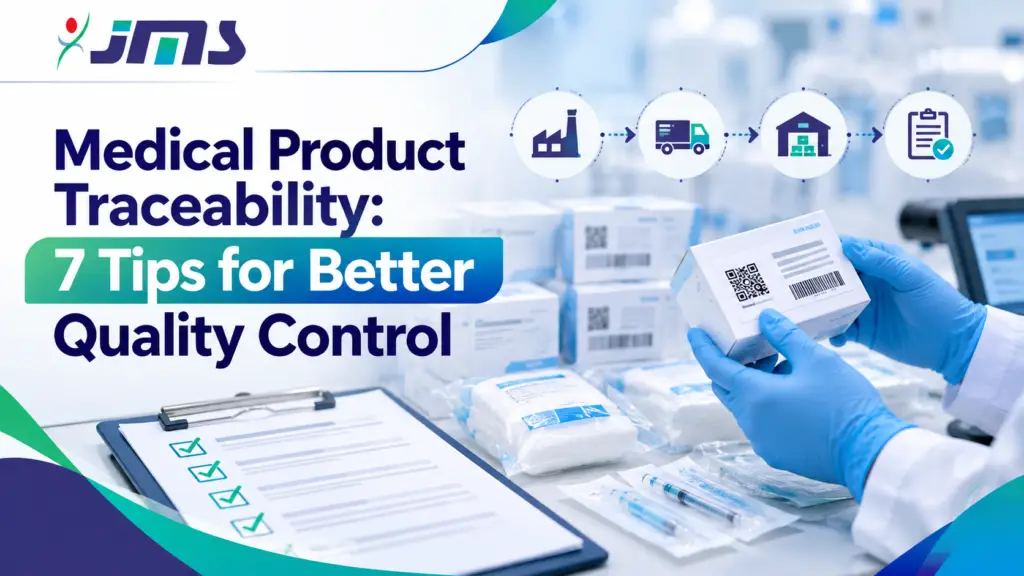
Medical product traceability is an important part of quality management across the healthcare supply chain. Hospitals, clinics, medical distributors, and healthcare suppliers need reliable product information to identify medical supplies, verify documentation, manage inventory, and respond effectively when a quality issue occurs.
Batch records, product labels, purchase documents, and supplier records help establish a documented history of medical products as they move through manufacturing, distribution, storage, and delivery.
A well-organised traceability process can help healthcare organisations improve inventory control, support quality investigations, and maintain better visibility over the products they purchase and distribute.
In this article, we explore seven ways medical product traceability and documentation support healthcare quality.
What Is Medical Product Traceability?
Medical product traceability is the ability to identify and follow a product through relevant stages of its supply chain using records such as product identifiers, batch or lot numbers, supplier information, and transaction documents.
The exact traceability requirements depend on the product category, applicable regulations, and the organisation’s role in the supply chain.
For example, a healthcare facility receiving medical consumables may record the product name, supplier, quantity, batch or lot number where applicable, receipt date, and expiry date where relevant. These details help staff identify the products held in stock and retrieve information when needed.
1. Supports Product Identification and Verification
Accurate product identification helps healthcare organisations confirm that the products received match the items ordered.
Product labels and accompanying documents can provide details about the manufacturer, product model or reference, batch or lot number, quantity, and intended use, depending on the product.
Procurement and receiving teams should compare this information with purchase orders and delivery documents before accepting supplies into inventory.
How it supports quality:
Helps identify products accurately
Reduces the risk of product mix-ups
Supports verification of delivered quantities and specifications
Makes relevant product information easier to retrieve
Consistent product identification also helps staff communicate clearly with suppliers when discrepancies arise.
2. Improves Batch and Lot Record Management
Batch or lot numbers can help distinguish one production group from another. When a quality concern affects a particular batch, these identifiers may help organisations determine which products need investigation.
Healthcare facilities and distributors should maintain batch or lot information where applicable and appropriate to the product and their traceability obligations.
Records should be accurate, legible, and linked to relevant receiving, storage, and distribution information.
How it supports quality:
Helps identify affected product batches
Supports targeted investigations
Improves stock visibility
Reduces unnecessary disruption when an issue is limited to specific products
Batch-level records are particularly useful when suppliers issue a product alert or recall.
3. Strengthens Supplier Accountability
Supplier documentation helps organisations establish where products came from and which commercial transactions relate to a particular delivery.
Purchase orders, invoices, delivery notes, supplier details, and relevant product documentation create an evidence trail that can be reviewed when a discrepancy or quality complaint occurs.
Healthcare organisations should maintain clear procedures for supplier approval, document review, and follow-up on missing or inconsistent information.
How it supports quality:
Improves visibility into product sourcing
Helps resolve order discrepancies
Supports supplier performance evaluations
Creates a clearer record of purchasing decisions
Reliable documentation also makes it easier to assess whether a supplier consistently meets the organisation’s procurement requirements.
4. Helps Manage Expiry Dates and Inventory Rotation
Some medical products have expiry dates or use-by dates that must be monitored. Traceable inventory records help staff identify products approaching expiry and apply appropriate stock-rotation procedures.
A first-expiry-first-out (FEFO) approach prioritises the use or distribution of suitable products with the earliest expiry dates, subject to their storage conditions and applicable requirements.
Facilities should also document damaged, expired, quarantined, or otherwise unsuitable stock according to their internal procedures.
How it supports quality:
Improves expiry-date visibility
Supports appropriate stock rotation
Helps reduce avoidable inventory waste
Makes stock checks more systematic
Accurate records are most effective when combined with routine physical inspections and appropriate storage practices.
5. Supports Product Complaints and Quality Investigations
When a product complaint is reported, relevant documentation can help an organisation understand what was supplied, when it was received, and which batch or lot may be involved.
For example, a healthcare distributor receiving a complaint about damaged packaging may review the delivery record, product label, supplier information, and any available inspection documentation.
The organisation can then follow its established process for documenting the complaint, notifying the relevant parties, and determining whether further investigation is required.
How it supports quality:
Provides information for complaint investigations
Helps identify potentially affected stock
Improves communication with suppliers
Supports corrective and preventive action where appropriate
A consistent complaint-management process helps organisations identify recurring issues and evaluate whether changes are necessary.
6. Improves Recall Readiness and Response
A product recall or safety notice may require an organisation to identify affected products and take appropriate action within a specified timeframe.
Traceability records can help determine whether the relevant products are in stock, have been transferred to another location, or have already been distributed to customers or facilities.
Organisations should maintain a documented procedure for reviewing product alerts, identifying affected stock, communicating with relevant parties, and recording actions taken.
How it supports quality:
Helps locate potentially affected products
Supports timely communication
Enables more targeted stock checks
Creates records of actions taken during a recall
Traceability records do not replace an effective recall procedure, but they can make that procedure easier to execute.
7. Supports Audits and Continuous Quality Improvement
Healthcare suppliers and facilities may need to review purchasing records, product documents, stock movements, and complaint histories during internal assessments, customer reviews, or applicable regulatory inspections.
Organised documentation makes it easier to retrieve evidence and identify gaps in existing procedures.
Periodic reviews can also reveal opportunities to improve receiving checks, supplier communication, inventory accuracy, and record retention.
How it supports quality:
Makes relevant documents easier to retrieve
Supports consistent internal procedures
Helps identify gaps in recordkeeping
Provides information for process improvement
Records should be retained, protected, and made accessible according to applicable requirements and organisational policies.
Essential Documents for Medical Product Traceability
The documents needed will vary by product type and business activity. Common examples include:
Purchase orders and invoices
Delivery notes and goods-receipt records
Product labels and batch or lot details, where applicable
Expiry-date information, where relevant
Supplier and manufacturer details
Product specifications and applicable quality documents
Storage and inventory movement records
Complaint, investigation, and recall records where applicable
Maintaining consistent naming conventions and linking documents to the relevant product records can improve retrieval and reduce confusion.
Best Practices for Improving Medical Product Traceability
Healthcare organisations can strengthen traceability by adopting a few practical measures.
Standardise Recordkeeping
Use consistent fields for product identification, supplier information, batch or lot numbers, receipt dates, and expiry details where applicable.
Inspect Products on Receipt
Check delivered quantities, product identity, packaging condition, labels, and relevant documents before updating inventory records.
Use Digital Records Where Appropriate
Inventory management systems or other suitable digital tools can help organisations search records, track stock movements, and retrieve information more efficiently. Access controls and reliable backup procedures should be considered.
Review Supplier Documentation Regularly
Establish a process for identifying missing, outdated, inconsistent, or product-inappropriate documents and resolving issues with suppliers.
Train Relevant Staff
Ensure procurement, warehouse, quality, and distribution staff understand the organisation’s traceability procedures and their responsibilities for accurate recordkeeping.
Common Traceability Mistakes to Avoid
Poor documentation can make product investigations more difficult. Common issues include:
Missing or incorrectly recorded batch numbers
Product labels that are unclear or inconsistent with delivery documents
Incomplete goods-receipt records
Failure to update inventory after stock movements
Inadequate documentation of product complaints
Difficulty retrieving records during an investigation
Unclear responsibilities for reviewing product alerts
Regular checks and clearly assigned responsibilities can help reduce these gaps.
Conclusion
Medical product traceability supports healthcare quality by improving product identification, batch record management, supplier accountability, inventory rotation, complaint investigations, recall readiness, and audit preparation.
Accurate documentation gives healthcare organisations better visibility into their medical products and helps them respond more systematically when discrepancies or quality concerns arise.
By maintaining suitable records, following consistent procedures, and reviewing traceability practices regularly, hospitals, distributors, and healthcare suppliers can strengthen their quality-management processes and support more reliable supply-chain operations.
About JMS Medicon Private Limited
JMS Medicon Private Limited supports healthcare supply requirements through its medical and healthcare product offerings. Healthcare organisations can contact the company to discuss product availability, specifications, and procurement requirements.
Contact Details
Email: jmsmedicon@gmail.com
Phone: +91 9437040988
Office Address:
Plot No-85, Padmalava Nagar, Trisulia, Cuttack, Odisha – 754005
Registered Address:
H-1370 DSIDC Industrial Complex, Narela, Delhi – 110040
Website: https://jmsmedicon.com/
